
Runway
Runway AI video tool’s core advantage lies in its API
 DeepL API
 for efficient batch professional translation
Official Website: https://www.deepl.com/en/products/api
I regularly handle multilingual content such as technical documentation and product manuals, which needs to be both accurate and fast. The tools I used before either got technical terms completely wrong or required manual copy-pasting and editing, which caused delays. When setting up the DeepL API, I hit several beginner pitfalls before finding the right approach.
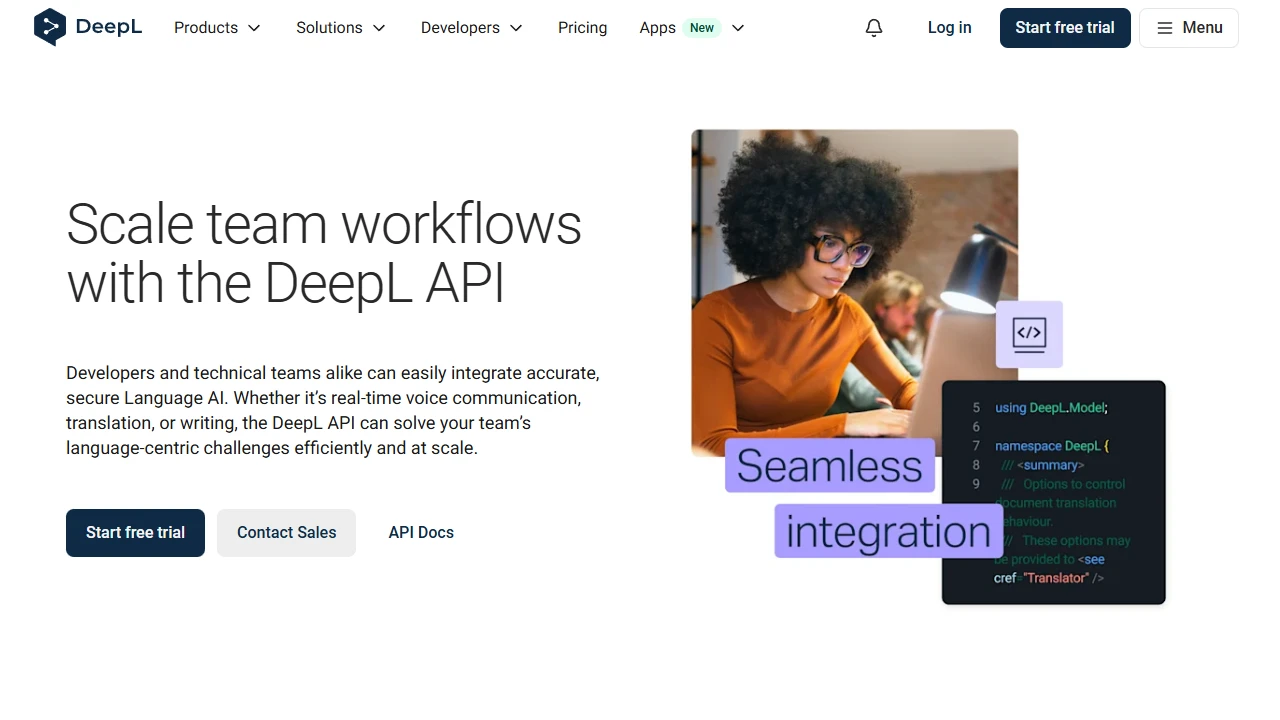
This API is not meant for everyday personal translation; it is designed specifically for users with batch, high-precision translation needs. It can be embedded directly into your own content processing and development tools, so there is no need to manually copy and paste content — you can integrate the translation process into your existing workflow. This is the most practical aspect, setting it apart from ordinary personal translation tools.
In terms of specific features, the document translation module is very practical. Whether the uploaded source file is Word, PDF or another format, the original layout is preserved after translation, so there are no formatting issues. The glossary feature can be custom-created: enter the standard translations for a specific industry, and they will be automatically applied when calling the API. For example, when I work on electronics content, I fix the translation of a core component, and every mention of it comes out correctly. There is also a model list — different scenarios can use different models. The basic model is sufficient for ordinary text, while professional content calls for the advanced model, so you never have to settle for a mismatched model.
Compared with similar translation APIs — I have used quite a few — some platforms are not precise enough with translations in professional fields, especially less common languages, producing stiff, awkward output. Others have opaque billing rules, for example counting punctuation marks and spaces towards the character count, which indirectly increases costs. DeepL’s API charges based on the actual valid characters translated, and its translation models for less common languages are more mature, with translations closer to industry standards, making it suitable for scenarios that demand precision.
You also need to be clear about who this is for — not everyone will find it useful. It suits only those with batch, professional translation needs, such as developers localising apps into multiple languages, foreign trade companies batch-processing product manuals, research institutions batch-translating foreign literature, and content teams producing multilingual content for distribution. For these users, this API can greatly reduce manual correction work and improve efficiency.