Screenshots
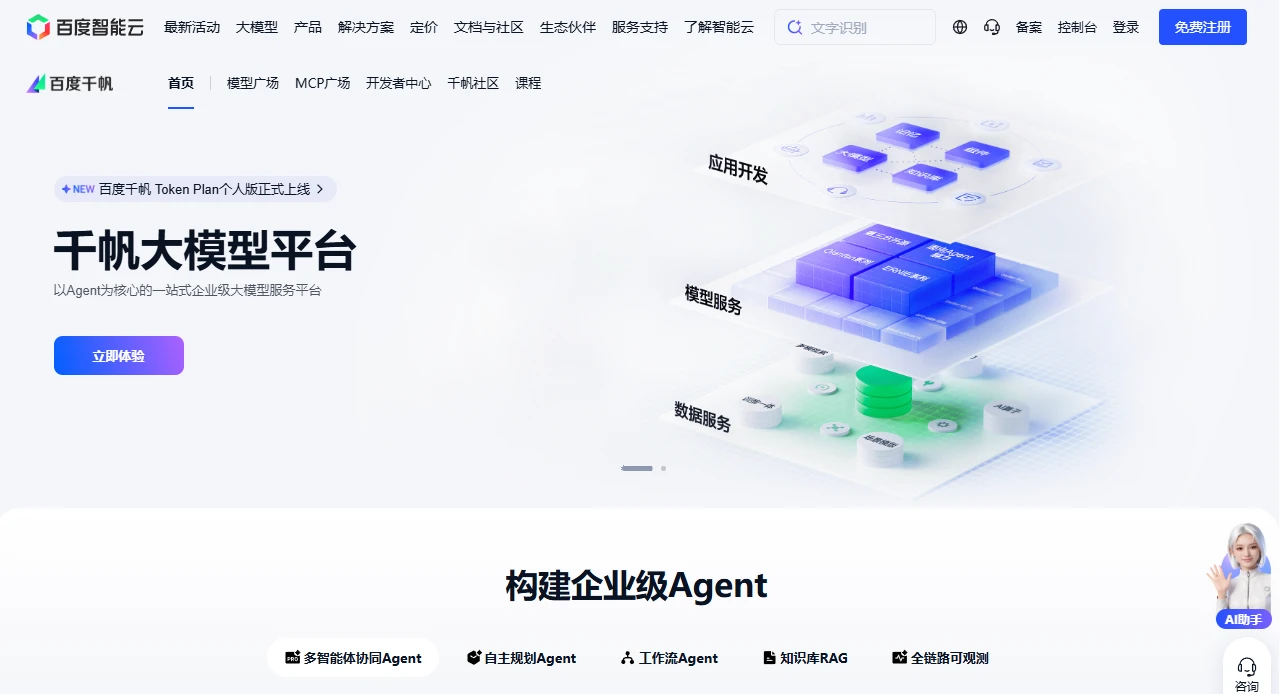
Baidu AI Cloud Qianfan Large Model Platform
Official website: https://cloud.baidu.com/product/qianfan
When I was looking for large model APIs for my own AI-assisted work tool, I ran into plenty of platform pitfalls — some only had chat demo pages with no usable API to be found, while others had unstable models or messy documentation. It wasn’t until I used this platform that my core needs were finally met.
- [A common beginner’s mistake] Don’t click the prominent “Experience Entry” on the homepage — that’s a demo page for ordinary users to chat. To find the development features you must switch to the dedicated API module. The first time I clicked in, I assumed the platform had no core features at all and wasted my time.
- [Core practical value] Unlike large model tools focused on consumer-facing interaction, this platform is designed specifically for secondary development. There is no redundant chat interface — just API documentation, model invocation, fine-tuning and deployment, the things developers actually need, so you can graft large model capabilities directly into your own product.
- [Detailed feature experience] You can view the full list of ERNIE models directly — the API documentation for each model is annotated in great detail, and there is a separate pricing page. When fine-tuning a model you can upload custom datasets, the platform comes with built-in model evaluation tools, and it can generate ready-to-call code with one click, so you don’t have to set up the underlying environment yourself.
- [Advantages over similar platforms] There are quite a few large model development platforms in China, but their model updates lag behind, their APIs drop connections frequently, or they charge extra deployment fees. The ERNIE models on this platform are mature, industry-validated products, with highly stable API calls and enterprise-grade security configurations that need no extra adjustment — ideal as a long-term development foundation.
- [Real-world tips to avoid pitfalls] Before calling the API, be sure to check the billing rules — I didn’t pay attention at first and exceeded the basic traffic quota on my very first call. When fine-tuning a model, you must upload datasets strictly in the officially required format; my first upload used the wrong format and the fine-tuning task failed outright. Before modifying API parameters, check the documentation first — random changes can trigger API permission restrictions.
- [Who it’s for] It suits technical teams that need to integrate large model capabilities into their own products, AI product developers, and practitioners who build custom AI tools for enterprises. If you are just looking for a place to chat with a large model for everyday content, the platform’s focus is a complete mismatch — you would find it redundant.
Besides, the platform’s permission management is very flexible: you can set different API call permissions for different members — for example, only allowing developers to debug parameters, preventing non-technical staff from accidental operations. When a new model in the ERNIE series is released, the platform syncs the API right away, so you don’t have to wait for the delayed updates of third-party platforms, which is great for keeping up with technology iterations.
When I used it to connect our own knowledge base Q&A tool, I simply copied the sample code provided by the platform, replaced a few parameters, and it worked — no need to dig into the underlying API protocols myself, which saved a lot of debugging time. Overall, my impression is that this is a platform that truly understands developers’ needs, not one of those filler large model aggregator sites.

 Baidu Qianfan