SenseNova Daily
SenseNova is a practical AI API development platform
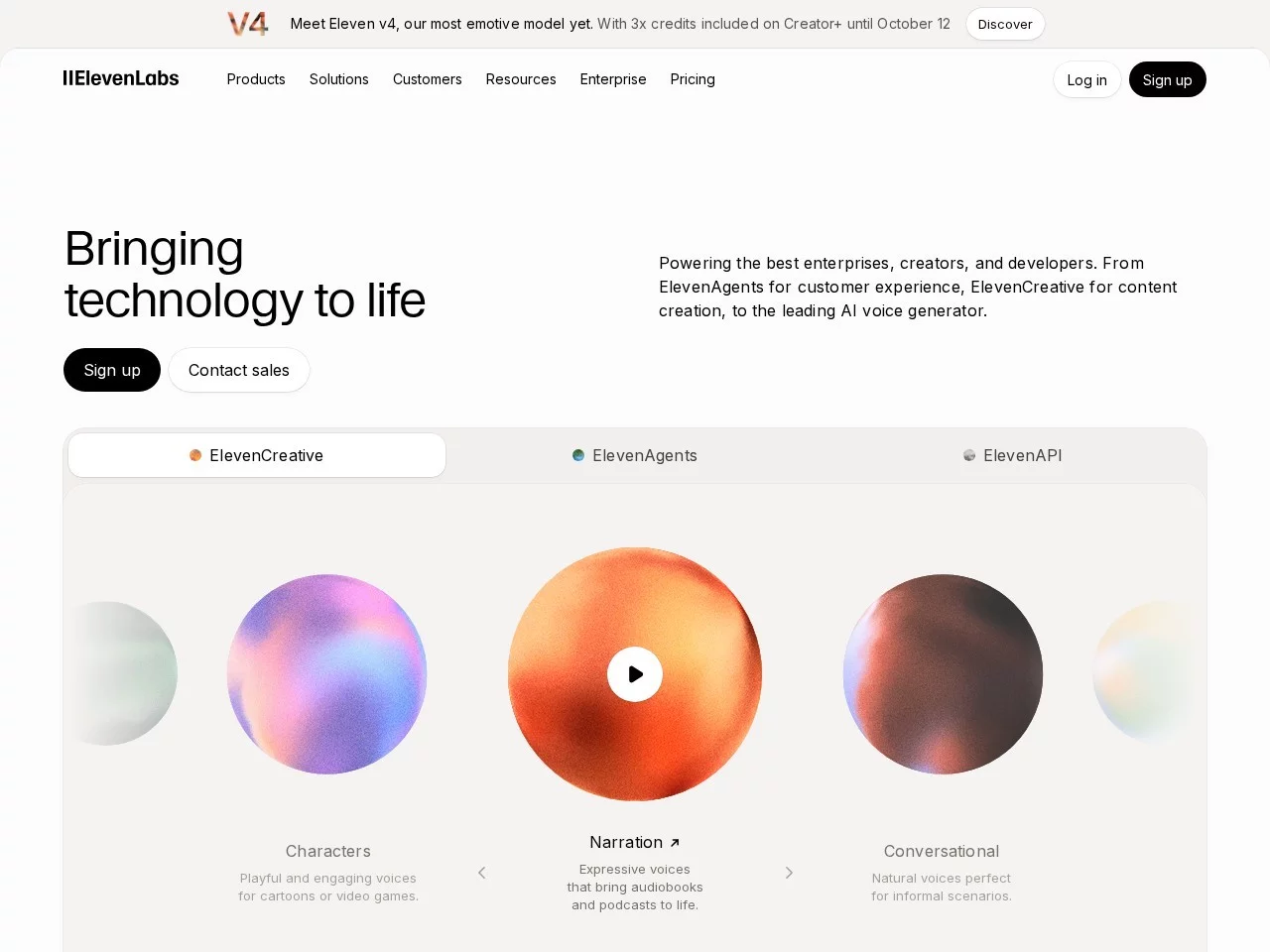
 ElevenLabs
 is a practical AI voice creation tool
Official website: https://elevenlabs.io/
I’ve used several AI voice tools when creating audiobooks before, and the pitfalls I encountered could fill half a page: either the synthesized voice was as stiff as a machine reading a script, with no emotional fluctuation at all; or batch generation required manual operation, taking half an hour for multiple sections; some also required binding a bunch of permissions, making me worried about leaking my content. It wasn’t until I found this site that I solved the core pain points.
The easiest pitfall for new users is clicking the small chat pop-up as soon as they enter the homepage—most people think it’s only for chatting with AI, but it’s just an additional feature. The core functions are hidden in the sidebar, and many people go through a lot of trouble without finding them. I spent almost an hour on my first use before realizing that the batch generation, API calls, and other features I needed were not on the chat page at all.
The core value of this site is that it’s built for people with actual production needs, not as a chat tool for casual users. Its **voice cloning** and **TTS API** are really good—you don’t have to adjust parameters repeatedly like on other platforms. Just upload a few short, clear voice samples to generate a custom voice, and the synthesized voice comes with natural emotional rhythm, without stuttering or awkward sentence breaks like the tools I used before.
The most practical feature among the specialized functions is batch voice generation. After integrating with the API, whether it’s my own audiobook scripts or text from other content management systems, you can directly call the interface to generate audio without copying and pasting files back and forth. It supports many languages, and the synthesis effect for minority languages is more natural than many similar platforms, without the stiff translation-style awkwardness—this is extremely important for people creating cross-border content.
Compared with the platforms I used before, this site has obvious advantages: no watermark on the content, and the synthesized audio can be used for commercial purposes as long as you’re creating legitimate content. The API documentation is practical, with no fancy parameters—you can call it by following the steps, unlike some platforms that hide key details and make you guess for a long time. Also, the model is updated frequently, so the synthesis effect remains good and doesn’t become outdated quickly.
Practical tips to avoid pitfalls, organized into a few really useful points:
People who are suitable for this site are basically those with actual content production needs: audiobook creators, developers adding voice functions to products, studios needing batch synthesized dubbing, and even game dubbing teams—all can find corresponding functions. If you just want to play with an AI chatbot, this may not be your first choice, since its core functions are not for chatting, but for tools that help get work done.
Another detail worth mentioning: I tried voice generation on other platforms before, and the output audio needed format conversion to be imported into editing software. The audio synthesized on this site is in a universal format directly, so no secondary processing is needed, saving a lot of post-production time. For voice cloning, you don’t need long samples—just a few minutes of clear audio is enough, and the generated voice can adapt to different scenarios, such as narration in stories, character dialogues, and the tone can be adjusted without distortion.
In short, this site really solves my voice needs when creating content. It has no fancy functions, and all designs are centered around people who do actual work. After stepping on a few pitfalls, it’s getting more and more convenient to use.