
ModelBest
An on-device large model provider tailored to small and medium developers
 Tencent Hunyuan
A practical developer's guide to the Tencent Hunyuan API
Official website: https://cloud.tencent.com/product/hunyuan
People keep asking me: if you want a reliable large model API for secondary development, how do you choose? Developers who already have Tencent Cloud resources worry that the platform they pick will have unstable interfaces, be incompatible with their existing cloud environment, or charge sky-high prices for fine-tuning. I’ve used this one for quite a while, hit plenty of pitfalls, and picked up a few tricks along the way.
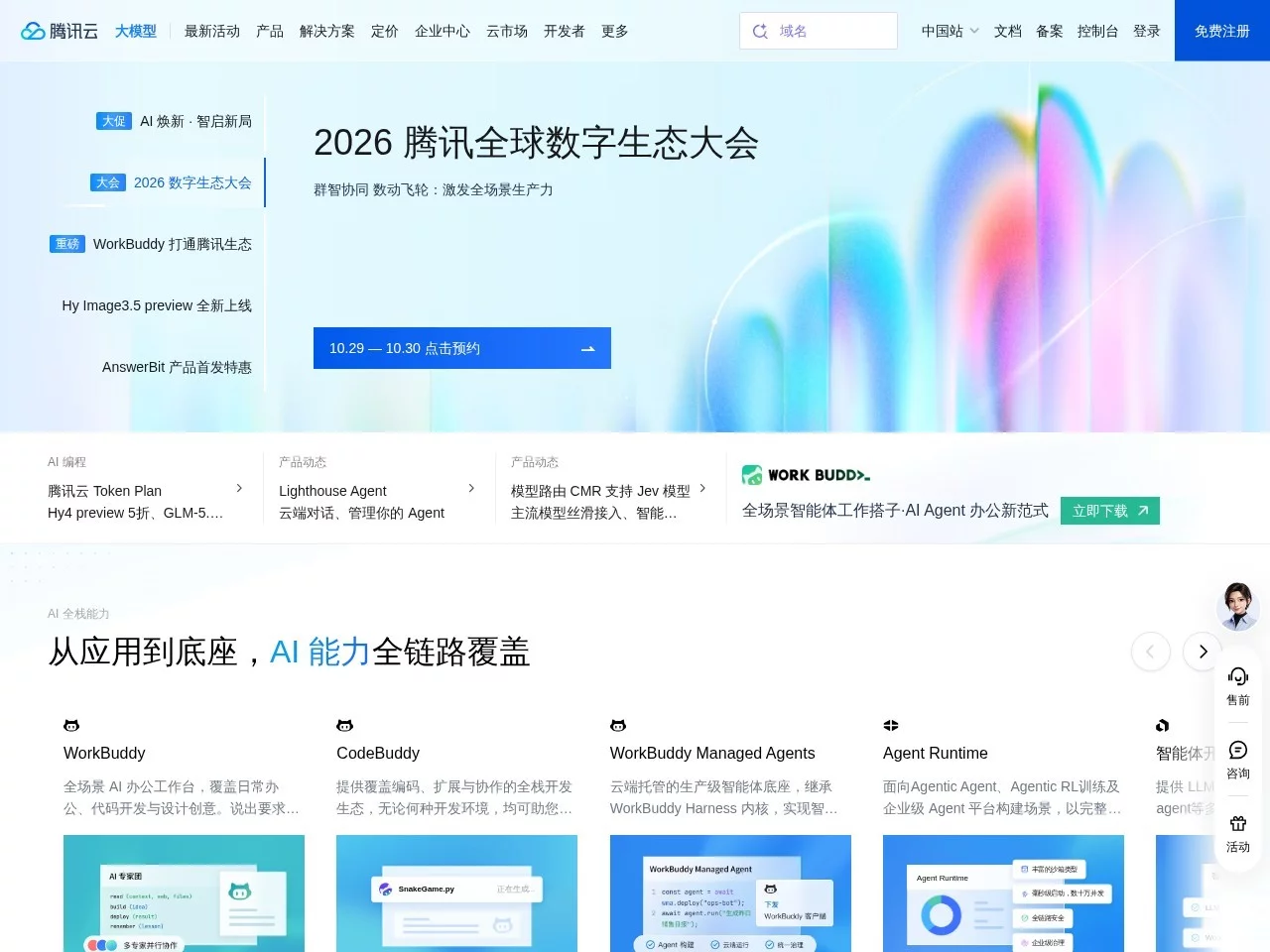
When I first started, I made a big mistake: I searched for Tencent Hunyuan, clicked into the official chat assistant page, and spent ages hunting for the API entry point — it turned out that chat page is just for ordinary users to try out, and the real API service lives in the cloud product section. Plenty of newcomers get stuck right there and waste time. Another misconception is assuming every model can be called directly; in fact, Hunyuan’s industry fine-tuned models require separate permission applications — you can’t just click a few times and use them. Beginners go straight to the general models, find the results underwhelming, and assume the platform is no good, when really they just haven’t understood the model categories.
What reassures me most is the deep integration with Tencent Cloud. For example, I run the interface on a Tencent Cloud server — no extra cross-network configuration needed, latency is considerably lower than third-party platforms, and permissions carry over: once logged into your cloud account you can call it directly, without applying for a separate API key, saving loads of repetitive steps. Then there’s the fine-tuning feature. I once helped a friend’s online shop generate product copy by uploading their best-selling product data to fine-tune a Hunyuan model — the generated descriptions matched the brand tone far better than the general model, and at call time you only need to pass the product ID instead of writing complex prompts every time. The efficiency gain was huge.
As for the documentation, it’s not one of those disorganised lists — it’s categorised by industry and function. Whether you’re doing code completion, copywriting or image generation, the corresponding documentation has a clear path, and error messages are very specific — you don’t just get a cryptic error code, so you can quickly pinpoint problems. There are also API call examples: whether you use Python or Java, Tencent Cloud offers ready-made SDKs, so you don’t have to piece together request headers and parameters yourself. When I used another platform’s API, I spent a whole afternoon just debugging signatures; here the test ran through in minutes.
Having compared several large model API platforms, Hunyuan’s advantages are pretty obvious:
A few practical tips for anyone getting started, to help you dodge plenty of pitfalls:
Finally, on who it suits: if you’re already using Tencent Cloud services, doing secondary development and needing industry-customised models, it’s an excellent fit; if you just want to chat for fun, you’re better off going straight to Hunyuan’s official chat page; if you’re after a completely free large model API, this isn’t quite it — but for developers, the value for money and stability are still very respectable.