Screenshots
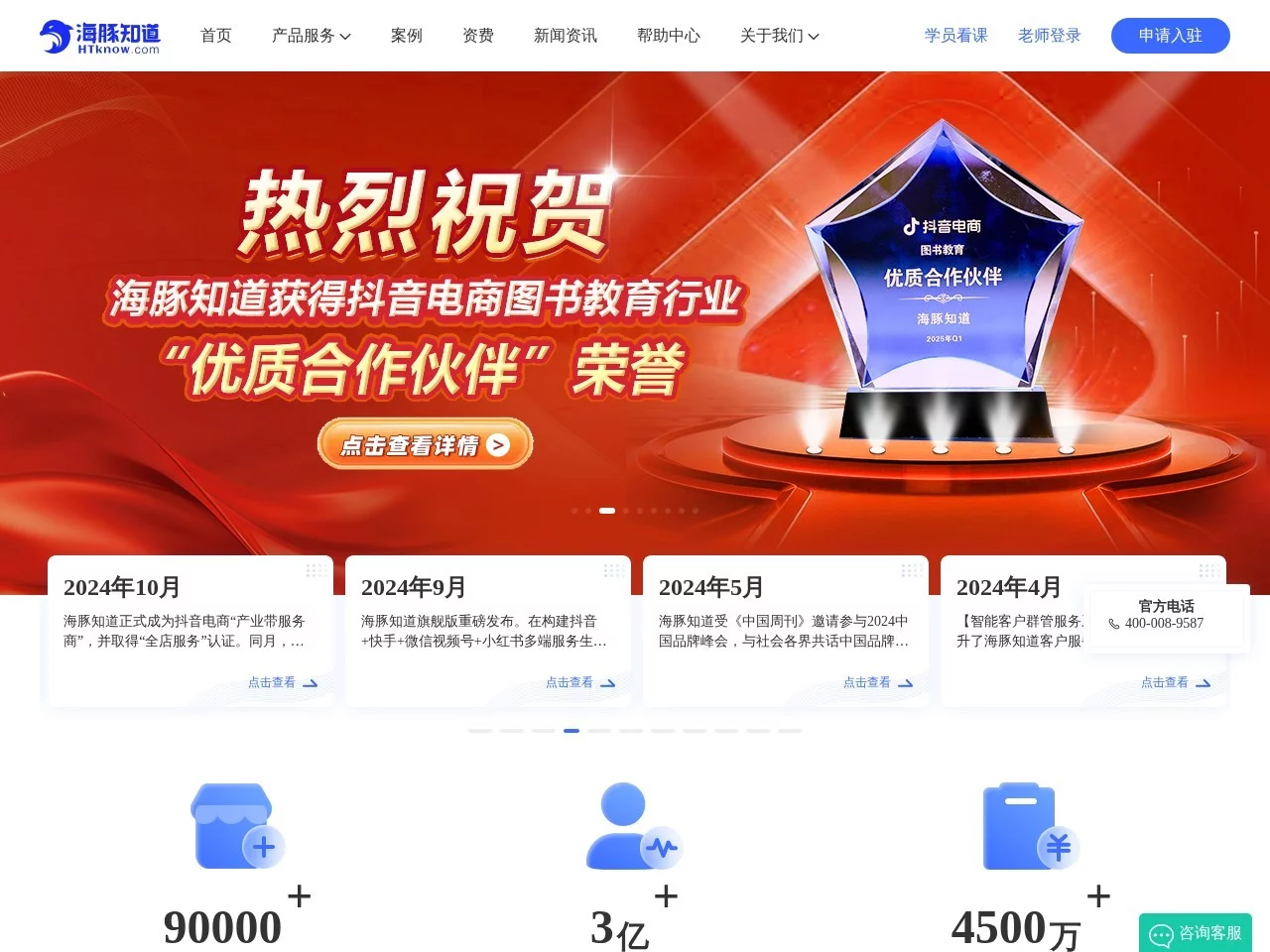
Haitun Know Official Website
Official Website: https://www.htknow.com/
I wanted to turn my years of practical workplace experience into paid content, and it took me almost half a year to figure out the ins and outs of monetising knowledge. The pitfalls I encountered along the way still give me a headache when I think about them. Before coming across this platform, I tried two or three tools — either with scattered functions that required multiple accounts, or with exorbitant commissions that hurt, or with such a messy backend that I couldn’t find my way around. It wasn’t until I met this platform that I felt I had found the right fit.
- Pitfalls beginners must avoid — hard lessons I learned the hard way
- Don’t think that once you upload a course, people will buy it. I was so naive at first — my course had only single-digit orders for two months. Later I realised that you need to use short videos for promotion, and I hadn’t even fully figured out the embedding function;
- Don’t listen to salespeople’s hype and rush to buy expensive packages. The basic functions are enough for beginners to practice. I impulsively bought an advanced package at the time, but half of the functions were completely useless, wasting almost half a year’s money;
- Never upload pirated or non-original content. The platform checks strictly — someone I know got their account banned immediately for using unauthorised content from the material library, with nowhere to appeal.
What I like most about this platform is that it’s all-in-one — no need to switch between tools back and forth. From building your own Mini Program for knowledge payment, to content embedding, user management, and data analysis, everything is done in one backend. It saves me the trouble of finding tech support and juggling multiple platforms. For someone like me who only does content and doesn’t handle tech, it’s really a huge relief.
- Several functions I use regularly are much more user-friendly than other platforms
- Short video embedding is a real necessity. When I post short videos, I can directly generate a jump link to the corresponding course in the backend, without having to edit the video to add a jump. Fans click the link after watching and go directly to my own paid page, not a third-party site. On previous platforms, the jump took two or three seconds, and many fans just swiped away;
- The data analysis is incredibly intuitive — you can see which videos drive the most orders, and when fans are active. I adjust my content based on the data, and the traffic has gradually increased. Other platforms either give vague numbers, or require you to export orders and count them manually, which is a huge waste of time;
- User management is also practical — people who have bought courses are automatically categorised. I created a fan group, sent exclusive benefits to drive repeat purchases, and many people came back to buy my advanced courses. Some platforms either charge extra for this function or don’t have it at all.
Compared with the two platforms I used before, this platform’s advantages are really obvious — these are differences I have truly experienced:
- Independent Mini Program — I have my own name and page, unlike some platforms which use subdomains and have no brand identity. My fans all remember my Mini Program name and it’s easy to find;
- Good compatibility — it can be embedded on Douyin and WeChat Channels, so you don’t need to create a separate set for each platform, saving a lot of repetitive work. A previous platform I used only worked with Douyin, so my content on WeChat Channels was basically wasted;
- Transparent commissions — no disputes. Other platforms often have discrepancies of a few yuan when calculating commissions, requiring me to check. This platform calculates everything directly in the backend, it’s clear at a glance, no need to worry.
There are also a few tips to make things easier for beginners, all learned from my own mistakes:
- Beginners should try the basic version first, and upgrade only when you have stable orders. Don’t be fooled by salespeople’s hype about advanced functions — I suffered because of this at the start;
- Don’t buy random traffic for promotion — rely on your own content first. The platform’s free promotion tools are enough for beginners. I grew using just a few practical videos, no wasted money;
- Don’t post too many hard ads in fan groups — share more practical content, otherwise you’ll get kicked out and damage your reputation. After all, people buy your courses for the content;
- Check the backend data regularly to adjust — for example, if a certain knowledge point gets good feedback, make more extensions; if not, revise it. This way, the repeat purchase rate will be high, since returning customers are much more cost-effective than new ones.
Finally, who is this platform suitable for? It’s perfect for individual creators, small studios, teachers and bloggers who want to do knowledge payment, especially those who often make short videos or go live, because the embedding function is so practical. If a large company needs a deeply customised complex knowledge payment system, it may not meet their needs, but it’s more than enough for lightweight monetisation — you don’t need to spend too much energy on tech, just focus on content.

 Haitun Know