
AI21 Labs
AI21 Labs is a practical large model tool for developers
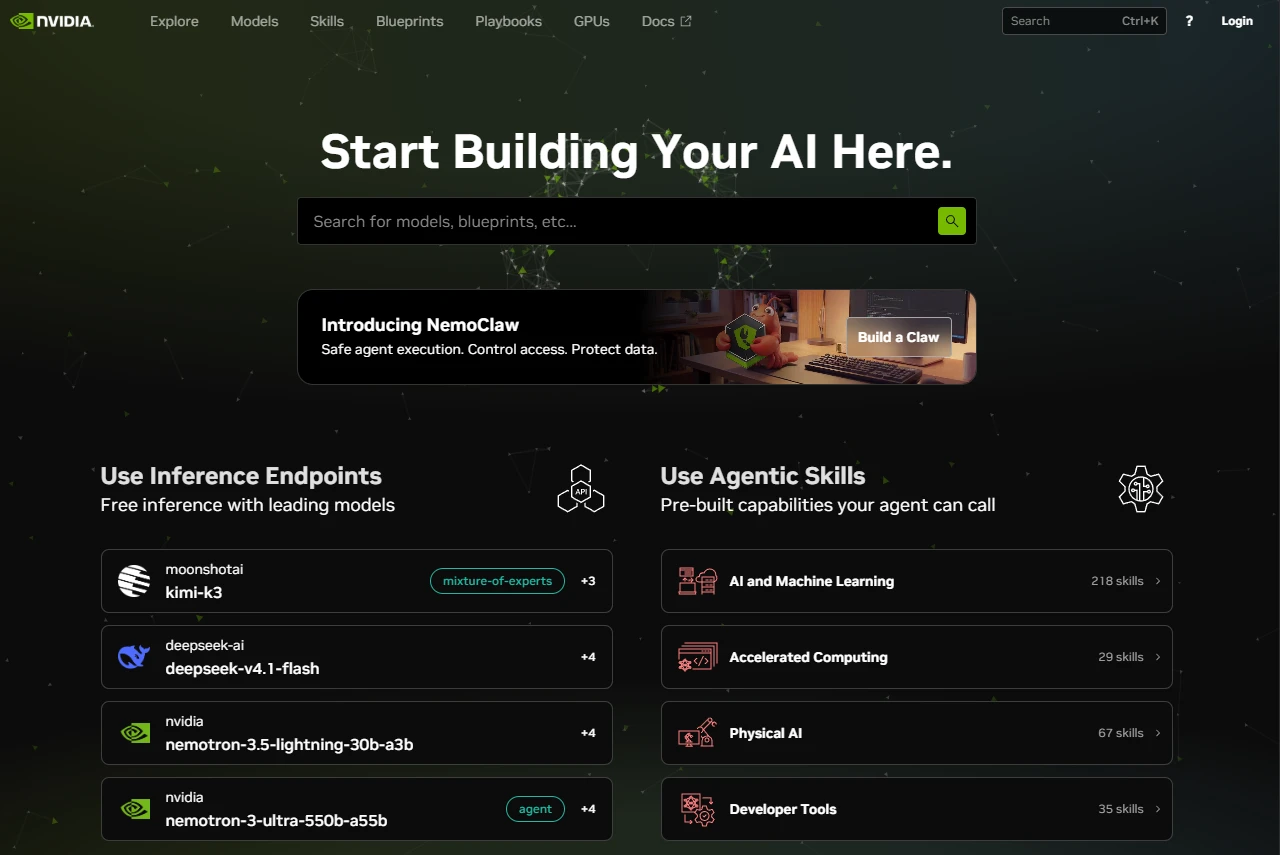
 Nvidia NIM
 is an API hosting platform designed specifically for developers
Official website: https://build.nvidia.com/
I was working on an AI assistant tool for content creators that needed to call large language models to generate first drafts. At first, I deployed Llama series models myself, and spent almost a week just debugging the environment—got dependencies wrong several times, and it took up most of the server memory, almost making me give up. Later I found this platform, and hit several pitfalls at the start, but also gathered some practical insights.
The two most confusing points when I first got in touch:
For developers like me who just want to build products and don’t want to manage server environments, its core advantages are very practical: no need to deploy models yourself. For mainstream models like Llama and DeepSeek, it directly hosts them as standard microservice interfaces. Whether building web applications or mobile tools, you can use them by connecting the interfaces, saving at least 60% of the time spent on environment debugging. Moreover, since these are official models, there won’t be compatibility issues that often come with third-party models, such as errors caused by incorrect parameter passing or outdated model versions. The parameter requirements for each model are clearly written in the documentation, so there’s no need to guess.
The functional experience in actual use is also quite satisfying:
Compared with other AI API platforms on the market, its differences are quite obvious: I used a domestic mainstream AI API platform before, many models were third-party proxies, and security vulnerabilities occasionally occurred. Changing models also required modifying most of the code structure, and there were many extra fees in pricing. But the models on this platform are hosted by Nvidia, so stability and security are guaranteed. NIM microservices are standardised, so changing models only requires modifying a few parameters, no need to adjust the overall architecture. Pricing is also fully transparent, only charged by the number of tokens, with no hidden costs. If there are problems, you can quickly find solutions by contacting official customer service or checking the documentation, unlike small platforms where customer service only sends automated replies.
After using it a few times, I also gathered some tips to avoid pitfalls, all summarised from actual mistakes:
Finally, let’s talk about the suitable crowd: this platform is more suitable for small teams or individual developers who want to build AI applications, don’t want to bother with deploying large model environments, need stable calls to official models, are worried about problems with third-party models, or need standardised interfaces to facilitate future model replacement. But it is not suitable for two types of people: one is ordinary users who just want to chat with a chatbot, it is not for daily chatting. The other is people who need to fully customize trained models. It hosts existing models and cannot modify the model structure by itself, only calls the interface, so there is no need to waste time.