Bilibili Rankings
A practical list entry for digging high-quality content on Bilibili.
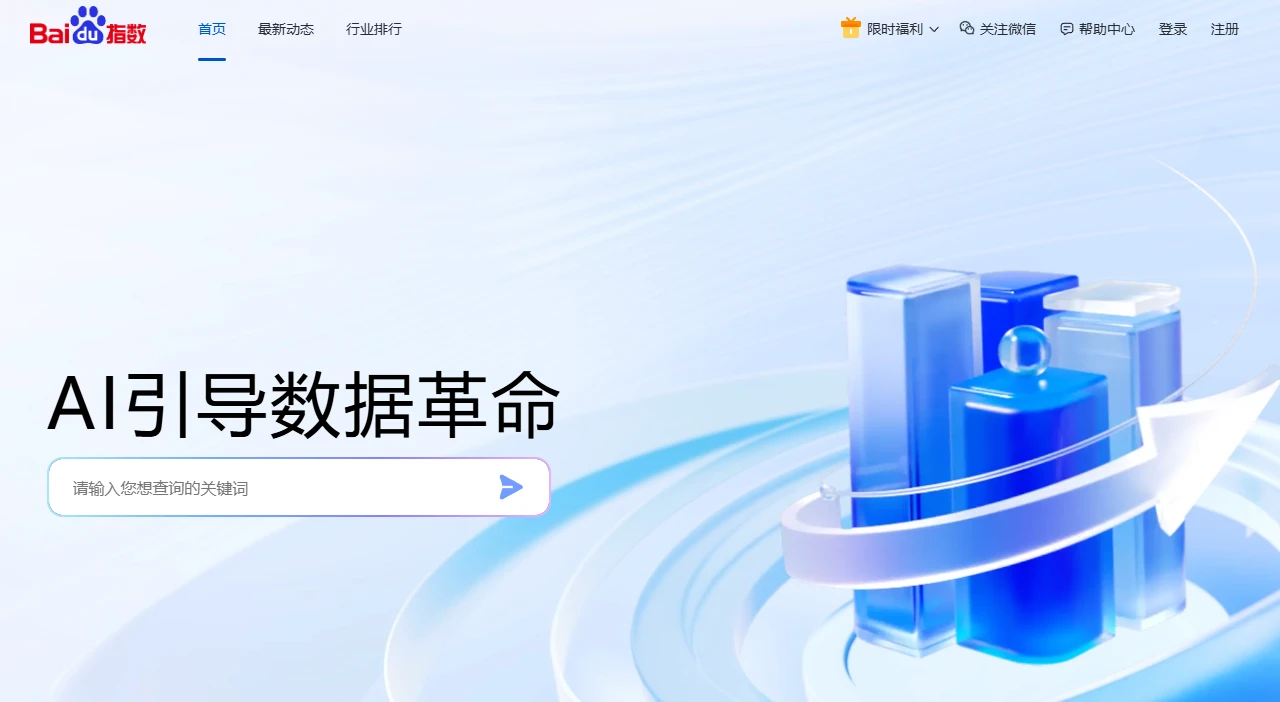
 Baidu Index
Qingcheng Navigation shares tips on using Baidu Index
Official website: http://index.baidu.com/
When I first wanted to find topic ideas for a mother-and-baby account, Baidu Index was the first tool I turned to. At first I thought entering any popular keyword would do, but the content I produced ended up with dismal reads. The first big pitfall I hit was looking only at overall heat without splitting the PC and mobile trends. I later found that many keywords get several times more heat on mobile than on PC, so writing content based on PC user habits means missing the traffic sweet spot entirely. Another common misconception is that you must log in to see the data — not true. Basic trends and related keywords are viewable without logging in, while logging in unlocks more granular user profiles, such as age, region and interest tags. For a content creator like me, these cold tags are more useful than heat figures. The core value of this tool is not ranking hot keywords to grab eyeballs, but digging out users’ unspoken real needs. For example, when I searched “baby food”, besides the heat curve of the broad term, the demand graph below threw up words like “iron-fortified”, “additive-free” and “introduced at six months” — these are the specific pain points beyond “what is baby food”. Breaking these pain points down into content performed far better in data than my earlier haphazard chasing of broad terms. As for the features I actually use, I rely most on the demand graph and audience profiles. The demand graph clearly shows what users search alongside after the target keyword — a ready-made long-tail topic library, so I don’t have to dig blindly through user comments myself. Audience profiles are even more practical: users searching “baby food” are mostly mums born in the 1990s, concentrated in second- and third-tier cities. What they care about is “how to choose trustworthy baby food” and “whether it contains additives”, not the sort of generic “baby food recommendation lists”. Write precisely, and users will stay. Compared with other data analysis tools, this platform’s advantage is obvious — its data is based on active search behaviour on Baidu. Users search with clear needs, rather than it being content exposure data generated by the platform itself, so it better reflects real market demand. But its drawback is equally prominent: the data source is single. If a brand spends heavily on keyword bidding ads, there may be a batch of invalid search volume inflating the heat. Then you have to cross-verify with other tools instead of trusting it blindly. I’ve hit quite a few other pitfalls, summarised as follows:
The tips for using this tool efficiently needn’t be complicated — just focus on two things. First, look at the long-tail words in the demand graph and pick those with medium heat but high relevance; these words face less competition and easily attract traffic. Second, check the regions in the audience profiles: if most users are in second- and third-tier cities, write down-to-earth content and avoid overly technical jargon — users who can’t understand it will simply swipe away. As for who it suits: content creators, operations staff and market researchers — anyone who needs to capture users’ real needs. But if you’re only thinking of making quick money and want to post content riding a temporary hot topic, this tool probably can’t help — it looks at long-term demand trends, not one- or two-day heat, so long-term content planning is essential.