Weibo Hot Search
High-quality Weibo Hot Search official website, helping you obtain real global online popularity.
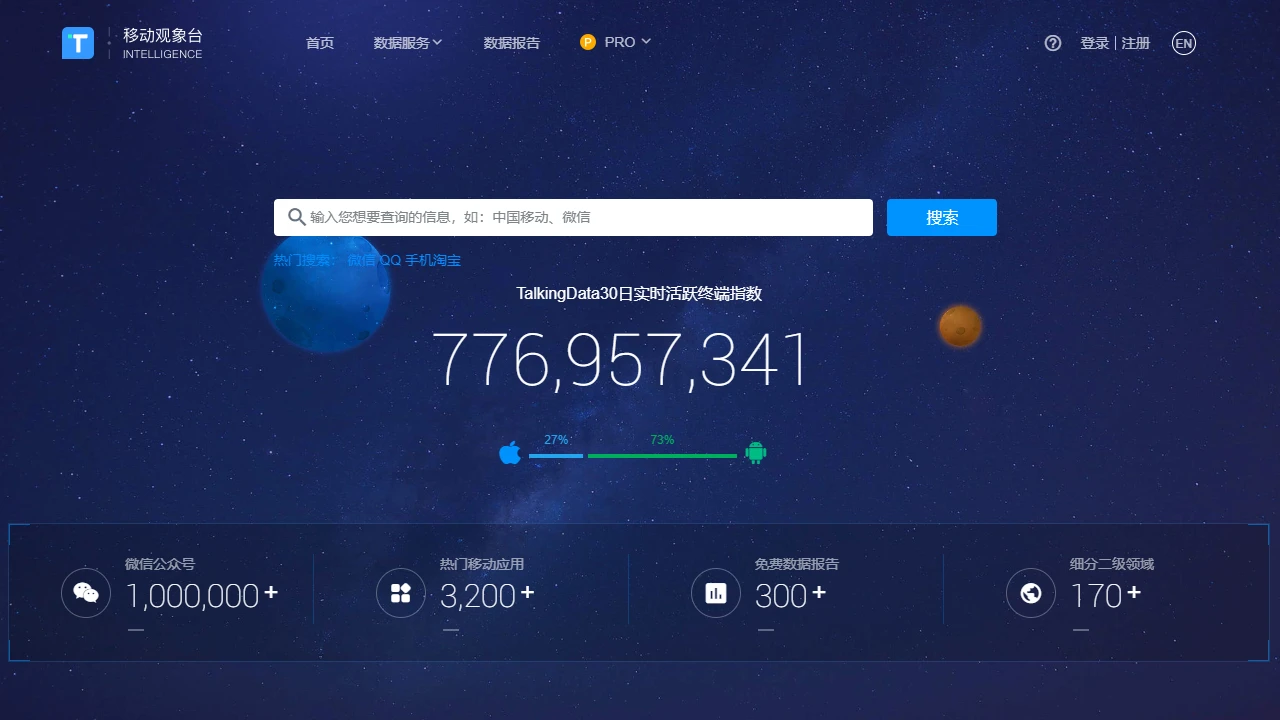
 Mobile Observatory
Sharing real user experience and advantages of Mobile Observatory
Official website: http://mi.talkingdata.com/ I worked in app operations for a while, and my daily work always revolved around digging up competitor data and tracking industry trends. I tried quite a few similar tools along the way — some were paid, some had outdated data, and others only offered vague overall rankings, none of which were really usable. It wasn’t until I came across this platform that most of my daily data needs were solved. When I first started, I made several mistakes that beginners tend to make, all because I hadn’t figured out how the platform works:
The platform’s core advantages that won me over are **free access, a low barrier to entry and highly up-to-date data**. No registration or login is required — you can look up most public data straight away, unlike some tools that make you fill in a pile of information before you can even see the basics; data updates are fast, with ranking changes for popular apps showing up the same day rather than being days-old stale data; and the data sources are reliable — you can tell it’s genuine device activity data, not an inflated list pumped up by fake traffic. The features I use most in my daily work are **app rankings** and **audience profiles**. For example, when doing competitor analysis, I can search for a competitor’s name and directly see its user age distribution, regional breakdown and commonly used device models. This data helps me adjust the app’s compatibility strategy — it was precisely this feature that let me narrow the app’s device compatibility down to the few models most used by core users, saving a lot of development costs. The device index is also practical: if you want to know the market penetration of a new device model, you can find it in this module without digging through scattered data yourself. I occasionally check the WeChat Official Account rankings too. They’re not the kind of fake lists boosted by fake engagement — they’re ranked by genuine reads and interactions, so you can find self-media accounts that are truly valuable. Compared with similar platforms, its advantages are quite obvious:
Here are a few tips I learned the hard way to help you avoid the same pitfalls:
The platform suits a fairly clear group of people: app operators for daily data monitoring, WeChat Official Account authors looking for similar accounts as references, marketers tracking mobile industry trends, and small investors watching how the sector evolves. If you need highly precise user research or enterprise-level detailed paid data, this platform may not meet your needs — after all, it’s public and free, the data is anonymised, and it won’t be too granular.