Weibo Hot Search
High-quality Weibo Hot Search official website, helping you obtain real global online popularity.
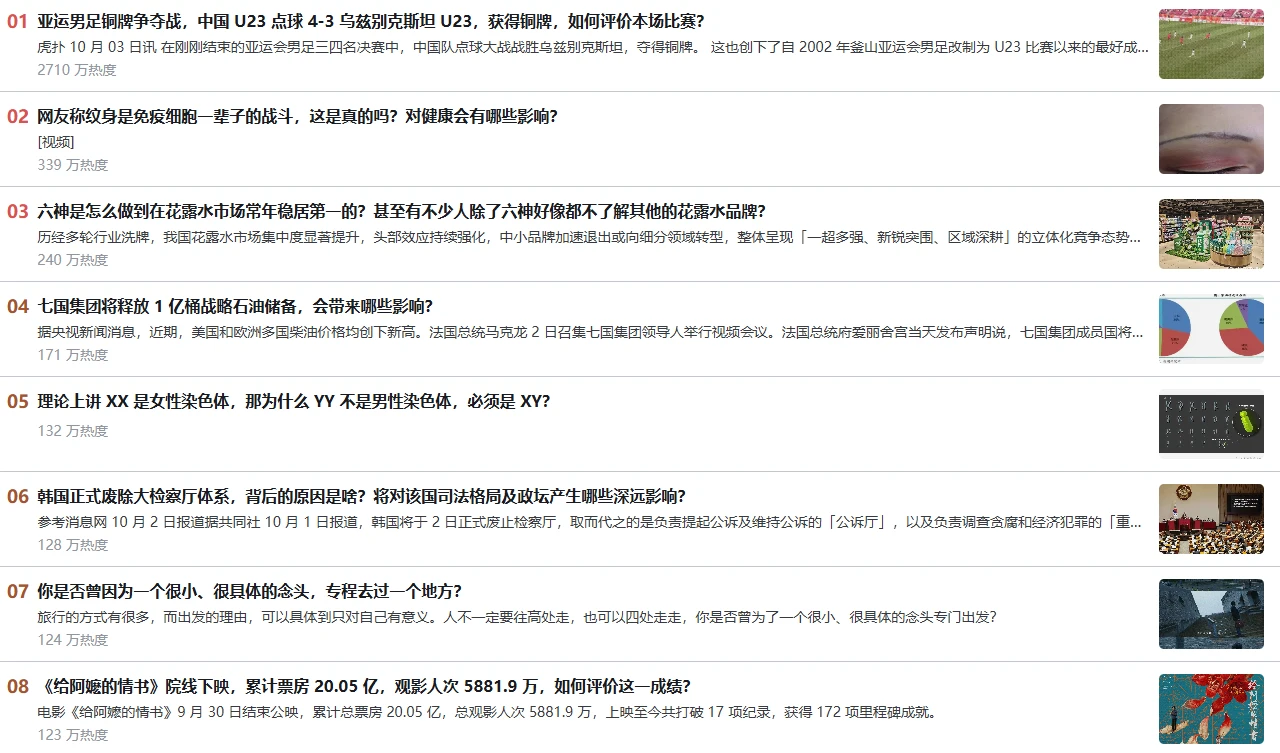
 Zhihu Hot List
Sharing practical usage and pitfall-avoidance tips for the Zhihu Hot List
Official Website: https://www.zhihu.com/billboard
It has honestly saved my computer’s memory — no need to open an app; just type the link into a browser and you’re in, sparing you from switching windows back and forth. Sometimes when I suddenly want to know about recent trending discussions in a certain field, there’s no need to search for keywords — one click and I can see what everyone is arguing about, saving a lot of effort hunting for information.
Newcomers just getting started can easily fall into two traps:
To be honest, its biggest difference from other platforms’ trending lists is not “trending topics” but “trending topics with discussions”. Other platforms’ hot lists tell you “what happened”, while this one tells you “what everyone thinks about it” — even for the same social event, other platforms only offer public sentiment, whereas here you can see different perspectives from those involved, industry professionals, and passers-by, not just one-sided output. For people who want to understand the real situation, this is incredibly useful.
Besides category filters, there’s another easily overlooked feature: the ranking logic of “discussion heat”, which doesn’t just look at page views but counts the answers and comments under a topic. Some topics appear to have sky-high view counts but hardly anyone is talking — clearly inflated numbers. This detail of the Zhihu Hot List can help you filter out a lot of invalid content, so you don’t waste time on topics with no substance.
I’ve discussed similar tools with a few friends before and found that the content density of the Zhihu Hot List really is different. Douban’s hot list leans towards artsy discussions, Weibo’s hot list is full of celebrity gossip, while Zhihu’s covers in-depth exchanges across various fields — for example, when a tech product is released, Weibo is flooded with “so cool” posts, Douban is full of “the design is stunning” comments, while Zhihu features technical spec breakdowns, industry impact analyses, and even genuine complaints from ordinary users — high information density, perfect for people who want to dig into the essence.
Here are a few personally tested, useful tips for avoiding pitfalls:
As for who it suits, I think it’s for people who don’t just want to feast on gossip but want to gain some valuable information — for example, professionals who want to keep up with the latest industry trends, students who want to explore diverse viewpoints on hot topics, and even content creators looking for topic inspiration. If you just want to scroll through gossip for fun, this may not be your cup of tea, because most topics require thinking — it’s not the kind of mindless pastime.
Occasionally you’ll run into its drawbacks — for example, some sensitive topics disappear outright, deleted faster than on other platforms. But overall, content moderation is stricter than its peers’, so not too much junk content slips in. For someone like me who can’t be bothered to hunt for information, typing in a link to get trending content with discussions is practical enough.