Screenshots
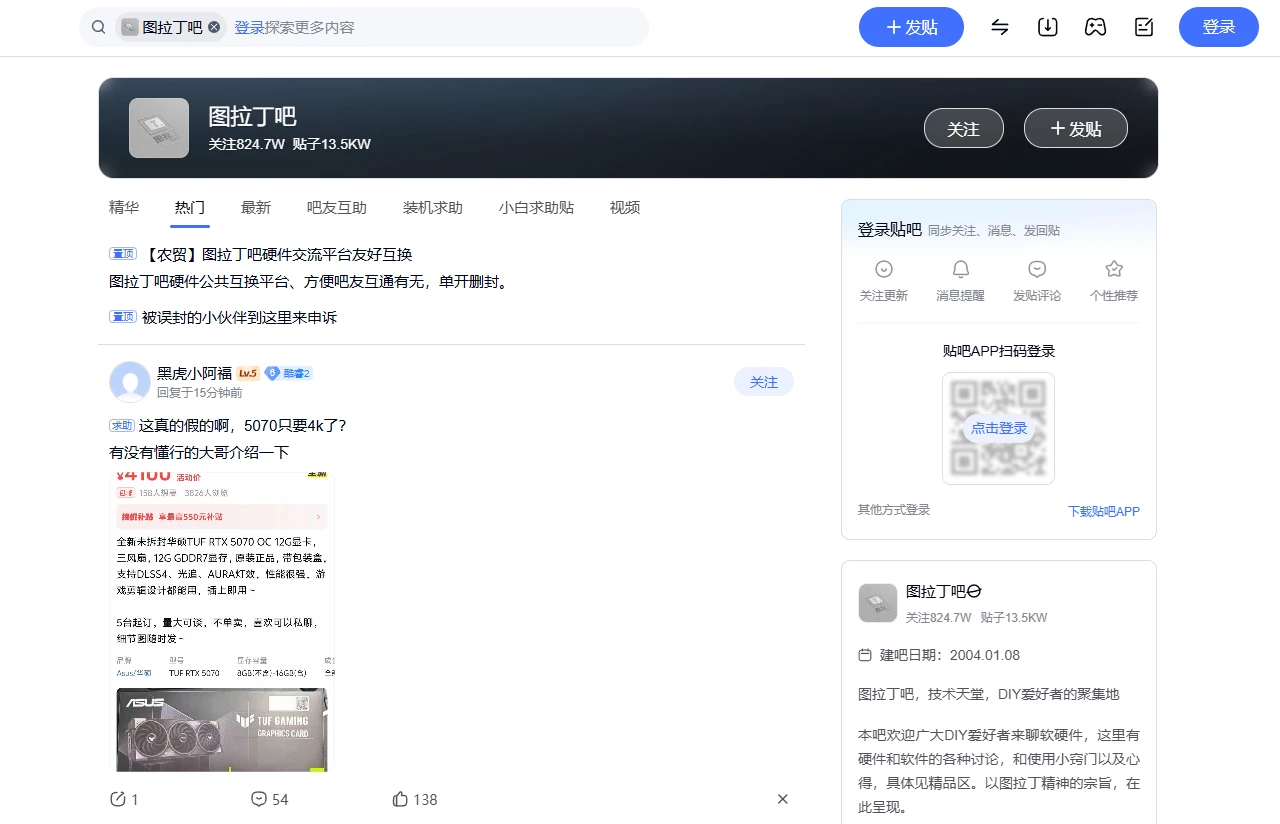
My Real Experience and Practical Tips from Years in Tualatin Bar
Official website: https://tieba.baidu.com/f?kw=%E5%9B%BE%E6%8B%89%E4%B8%81
Back when I wanted to build a PC that could run common office software and light online games, my budget was extremely tight. I went through all kinds of PC building guides online, but the recommended parts either went over budget or were all overpriced brand-new components. It wasn’t until a fellow enthusiast pulled me into this community that I finally found the right place.
I stumbled into quite a few pitfalls when I first joined, and looking back, they’re all typical beginner mistakes:
- Right after joining, I posted “3,000 yuan budget, looking for a dream machine”, and either no one replied or the regulars mocked me. Later I finally understood the real meaning of this meme: it’s not about building a top-performance rig, it’s a reminder not to chase unrealistic high-end configurations on a limited budget
- Treating “junk hunting” as collecting completely dead parts — it actually means looking for **second-hand or obscure discontinued parts that still have normal service life left**, such as pairing an old CPU with a cheap knockoff board, which can still meet everyday needs
- Sharing a build by just throwing out a list of specs without links to the parts or detail photos — members can’t give useful advice at all, and randomly thrown-together builds easily run into compatibility issues
- Casually adding private contact info posted in threads and immediately asking “got any reliable parts?” — many of these are merchants fishing for traffic, and it’s easy to fall into overpriced traps
The core value of this community isn’t teaching you how to build some incredibly powerful rig — it’s **a turf where ordinary players get together and share their real pitfall experiences**. There’s none of the stiffness of official tutorials; it’s all experience paid for with real money by the regulars, such as how to test second-hand hardware, where to hunt for obscure parts, and low-cost upgrade ideas for old devices.
Browsing this place day to day, you can dig up plenty of useful content:
- What I browse most every day is players’ build diaries — not configurations so perfect you can’t fault them, but real records of actual pitfalls. For example, someone bought a second-hand ex-mining GPU that started showing screen artefacts after half an hour of stress testing; someone paired a knockoff board with a certain type of RAM and spent half a month solving compatibility problems. This kind of content is more useful than any tutorial
- There are lots of upgrade solutions for old devices — for example, adding an M.2 SSD to an old laptop can more than double its running speed without replacing the whole machine — all little tricks proven to work first-hand
- The community’s own building tools are put together by members themselves, with no bundled software. They’re made specifically for verifying hardware authenticity, running stress tests and checking parts’ power-on hours — far more hassle-free than ordinary tools
Compared with similar platforms, this place’s advantages are obvious:
- More reliable than Xianyu: many sellers on Xianyu quote random prices or hide defects in parts, while the regulars here give genuine price references and some will even help you inspect parts, so you don’t have to worry about being ripped off
- More honest than other DIY forums: some building forums are full of advertorials recommending overpriced parts for money, while no one posts ads here — just heartfelt honest talk. Which part is a trap, which offers the best value for money, drawbacks are stated outright without hype
- More orderly than second-hand trading groups: in those groups you can easily get kicked or find no one in charge. Here there are forum rules, and although there are plenty of trolls, you can at least see genuine feedback from different people and won’t get fleeced
After lurking here for so long, I’ve summed up a few pitfall-avoidance tips you must follow:
- When looking for parts, try to use public trading posts within the Tieba and don’t add private contacts. Trading posts here keep records, so if something goes wrong you can ask the moderators to step in
- When testing a second-hand graphics card, always run stress-testing software for half an hour to check for screen artefacts or downclocking, and also check the power-on hours. Don’t trust the seller’s “practically brand new” claim
- When asking questions, list your budget, intended use and existing parts clearly — for example, “1,500 yuan budget, for Office and LOL, can my old case and PSU still be used?” — that way you’ll get targeted advice instead of random mockery
- Don’t blindly trust so-called “forum seller recommendations”. Read feedback from different people — for example, a certain knockoff board may be fine according to the sellers, yet many users have had CPUs burn out with it. Verify things yourself
The people this community suits are clear: budget-limited building novices, who can learn low-cost building approaches that avoid being ripped off; players who enjoy tinkering with second-hand hardware, who can find like-minded people to exchange experience on hunting for and modding parts; and users who want to upgrade old devices, who can find extremely cost-effective solutions.
Those who pursue perfectly brand-new hardware and won’t accept second-hand parts, or people who want to build high-end esports rigs, probably won’t fit in here — after all, the core of this community is “low cost” and “tinkering”, not maximising performance.

 Tualatin Bar