Screenshots
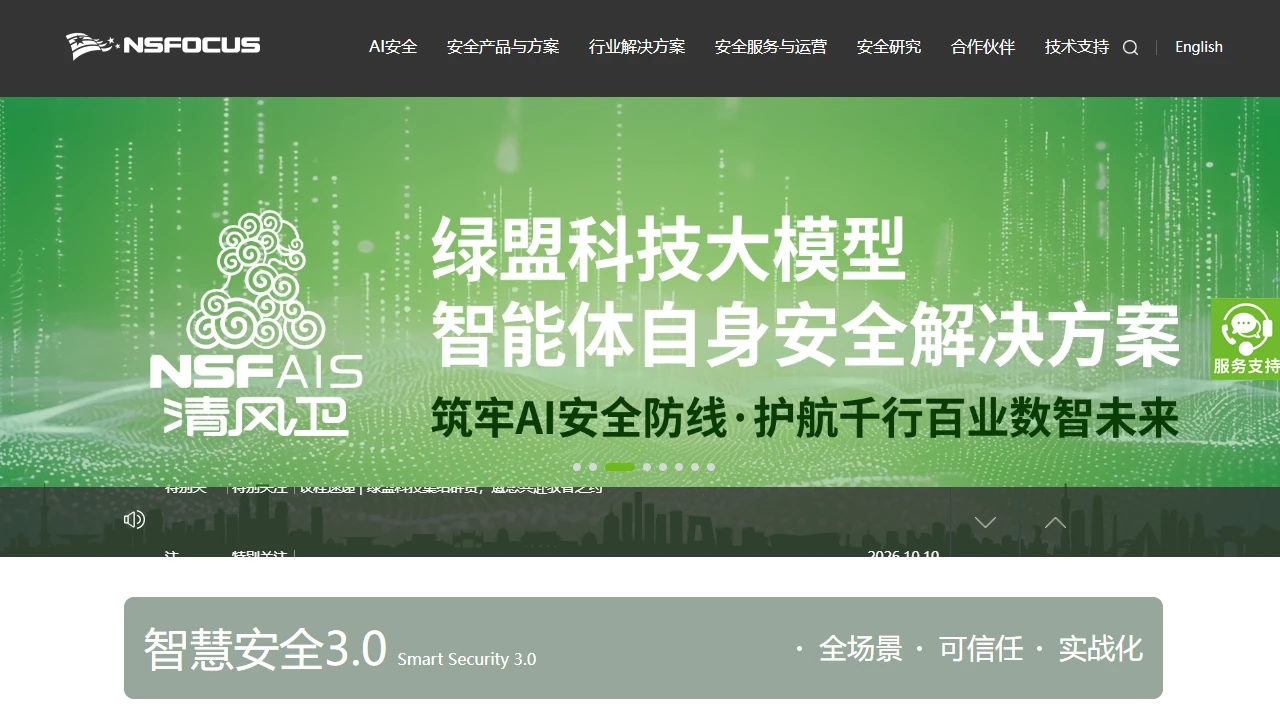
A few honest words for anyone sourcing security tools for their business
Official Website: https://www.nsfocus.com.cn
I’ve previously helped two companies with security tool selection, and I’ve racked up quite a pile of pitfalls along the way. When I first looked for security products, I always assumed big brands were good enough, but later I found that many so-called big-name products were either rebadged shells or completely mismatched with the business in terms of features, solving no real problems at all. There are so many misconceptions beginners have when choosing security tools — here are just a few I’ve come across:
- Only looking at the feature list on the official website without testing real scenarios at all — a peer of mine once picked a WAF from a big vendor; in the demo video it could fend off every kind of attack, but after deployment it mistakenly blocked the company’s payment API, and getting after-sales support meant having to tweak dozens of rules themselves; it took half a month to get it working properly.
- Assuming the more expensive the better — one company bought an entire security suite from a well-established vendor, only to find 80% of the features went unused; deployment alone took up half the server resources, and maintenance required dedicated staff — money completely down the drain.
- Trusting only the cases salespeople boast about without looking at their vulnerability research capability — many vendors’ case studies are made up; when you actually encounter a 0-day vulnerability, they can’t produce a ready-made response plan at all, and you end up hastily patching open-source code, which is extremely risky.
As for this site, I only came across it after stepping into those pitfalls. At first it was because of an urgent vulnerability in a certain industry — the response plan published here came nearly a week faster than other vendors’, and the accompanying POC was their own research, not copied from open source. The core value of this site isn’t actually those flashy features; it’s genuinely built on a solid technical foundation accumulated over the years:
- The vulnerability database is of genuinely high quality — it won’t send you random alerts; the severity ratings it assigns are very accurate, and you can see at a glance which ones will affect core business, so it doesn’t create extra work for security staff — for instance, other vendors would label an ordinary configuration vulnerability as high-risk, whereas this site only labels things truthfully and doesn’t manufacture anxiety.
- Their anti-DDoS expertise is deep enough that, unlike some vendors, they won’t cut off normal business traffic as if it were an attack — I tested this when helping a company run e-commerce: during peak hours with several million normal requests, there was never a single false block. That saves far more hassle than other vendors.
- Their security reports are genuinely actionable — not white papers stacked with jargon. They tell you exactly which patches to apply and how to adjust configurations, and even include response cases from the same industry, so you don’t have to dig through dozens of papers for solutions.
After using them, I found the products behind this site have specialised features far more practical than expected:
- The vulnerability scanner automatically prioritises the issues it finds, marks CVE-level high risks in red, and gives you industry-specific protection advice — for example, for e-commerce it highlights vulnerabilities in payment APIs, instead of blindly pushing the same patches for every business.
- Web application protection filters out most common attacks with its default rules and can even identify some novel WAF-bypassing requests — there was once a crawler attack disguised as normal users that other tools failed to stop, but the system here blocked it outright; afterwards their feedback said it was a new threat signature they had researched themselves.
- Their security solutions for finance and telecom operators really fit industry needs — for instance, protection for transaction APIs doesn’t mistakenly block legitimate payment requests, which for the two companies I helped was the single biggest source of peace of mind.
Compared with similar platforms, this site’s advantages are actually quite clear:
- Compared with the built-in security services of cloud providers, this is a pure security vendor that devotes all its energy to security research, rather than treating security as an add-on business with insufficient technical depth like cloud providers do — for example, cloud providers’ vulnerability databases are often updated late, whereas this database prioritises syncing industry-specific vulnerabilities.
- Compared with other established security vendors, the products are more flexible — no forcing you to buy the full suite; you can pick just the features you need, deployment is easier, and you don’t have to change much of your existing architecture — I tried another established vendor before, and deployment required tweaking a dozen or so server parameters, whereas the tools here work straight away without changing existing configurations.
- Compared with emerging security vendors, their emergency response capability is stronger — when you genuinely hit a major vulnerability, they have ready teams to follow up, so you’re never left chasing people — last year when a new type of attack appeared in a certain industry, the team here produced a response plan the same day, while other vendors were still gathering information.
That said, using their products does come with pitfalls to avoid — buying isn’t the end of the story:
- Don’t buy the full product range straight away; buy a single feature to test first — for example, try vulnerability scanning first, and only consider adding others if it works well, otherwise it’s easy to waste money — one of the companies I helped fell into this trap: they bought three features and ended up using only one, leaving the other two idle the whole time.
- When integrating, go to the technical support responsible for the specific product, not just sales — sales will only tout discounts on the full suite, while technical support understands real scenarios and can give you useful tuning advice, such as how to set vulnerability alert thresholds.
- When subscribing to the vulnerability database, choose the category for your own industry — if you’re in e-commerce, subscribe to e-commerce-related feeds, not all industries — otherwise you’ll receive lots of useless alerts, such as vulnerabilities relevant to manufacturing businesses, which will distract you from handling security issues affecting your core business.
- When deploying anti-DDoS, always do a small-scale test first — for example, deploy it to a subset of servers first, and only roll out fully if there are no issues — the first time one of the companies I helped deployed it, they skipped testing, set the thresholds wrong, and cut off traffic to the company’s campaign page for the better part of a day; it only worked properly after adjustments.
Finally, a word on who these products are suitable for:
- For industries with extremely high security requirements such as government, finance and telecom operators, the technical expertise and case studies here are more than enough to support their compliance needs.
- For companies with dedicated security roles that need in-depth technical support, the reports and technical support here can help security staff solve real problems, rather than just pointing them in a direction.
- For companies that don’t want to deal with security pitfalls every day and need reliable technical backing, the products here are stable enough not to throw up all sorts of inexplicable issues, reducing the workload of security staff.

 绿盟科技