Baidu Index
Qingcheng Navigation shares tips on using Baidu Index
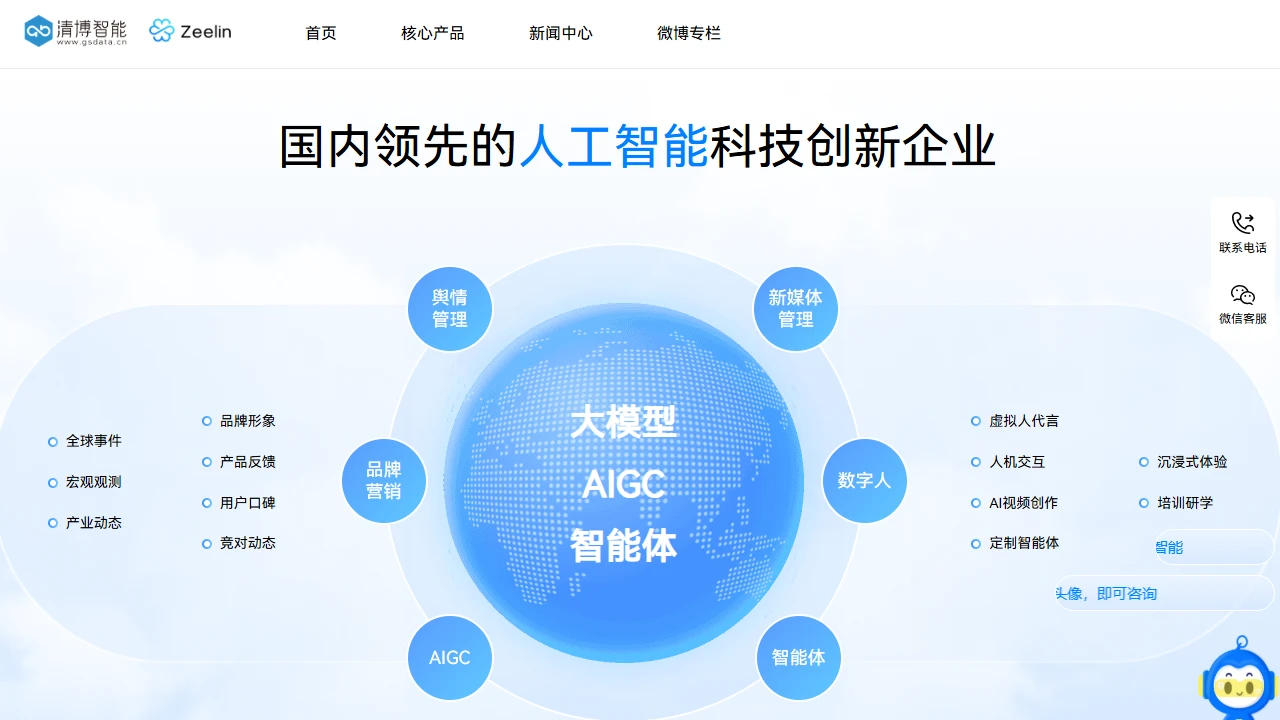
 Qingbo Big Data
 is a professional public opinion and new media analysis platform
Official Website: http://home.gsdata.cn/
I’ve been working in brand-related operations for some time, and the most stressful part is having to monitor two things at once: the content dissemination data of my own account, and the discussion trends about the brand across the entire network. I’ve tried several tools before, either the data is too shallow, only showing surface values, or the early warning is slow. It wasn’t until I came across this platform that I sorted out these two tasks.
When I first started using it, I made quite a few mistakes. For example, at the beginning, I only focused on the index ranking list, thinking that accounts ranked high would definitely be stable for promotion. But once I copied a topic from the list, the engagement rate was surprisingly low. Later I realized that I only looked at the surface dissemination volume, and didn’t notice that Qingbo’s list actually hides sub-dimensions of engagement quality — some accounts get on the list by buying traffic, with very few real user comments and reposts, which is the easiest place for beginners to overlook. Also, when I first used public opinion monitoring, I set the keywords too broadly, and hundreds of completely irrelevant contents popped up every day, wasting most of my time. Later I learned that I need to add precise modifiers, such as negative expressions related to competing products, otherwise it’s easy to miss core information.
The most practical part of this platform is that it’s not a single functional tool, but combines new media data and public opinion analysis, helping me find problems from the dissemination chain. For example, when a brand was mentioned negatively, its public opinion section can draw a dissemination path map, telling me which account spread it first, so I don’t have to go through each content one by one; and the content diagnosis function for new media operations can help me find problems in articles that I didn’t notice, such as keyword stuffing or titles that don’t meet the platform’s algorithm preferences. These detailed functions are rarely seen in other tools.
Compared with several similar platforms, its advantages are quite obvious. For example, the sentiment analysis of other platforms only divides into positive, negative and neutral, but it can do fine-grained sentiment analysis — such as complaining about product functions, questioning service attitudes, or just praising, which is particularly useful when dealing with brand crises, and can quickly judge the severity of public opinion; also, in terms of data coverage, Qingbo can capture contents from most mainstream social, short video and news platforms. The small platforms I used before always missed discussions in some vertical communities, and the data sources here are more complete, so I won’t miss any key information. Also, the industry reports are not general summaries, but data insights with specific cases, which can directly provide references for operation directions, such as the dissemination rules of a certain type of content in a specific time period. These contents help me save a lot of time organizing data myself.
After using it for so long, I’ve summarized a few tips to avoid pitfalls: the free version trial has a data volume limit, don’t set too many and too complex keywords, otherwise the quota will be used up quickly; for public opinion monitoring, remember to turn on synonym matching, such as homophones or abbreviations of the brand name, otherwise you will miss negative discussions like homophone puns; also, don’t just look at the level of values, but look at the reasons behind them, such as whether the index rise is due to reposts by key influencers or spontaneous discussions by users, which is the key to adjusting strategies.
As for the suitable crowd, if a personal blogger just wants to simply check the number of followers of their own account, they may find its functions too complex, after all, it is more inclined to in-depth analysis; but if it is practitioners such as corporate public relations, new media operations or government affairs content, who need to monitor data across the network and adjust dissemination strategies, this platform should be very practical, helping solve many troubles in daily work, and no longer need to switch between several tools at the same time.