TinyPNG
Speed up your website access and save bandwidth. TinyPNG compresses your WebP, PNG, and JPEG images by 50-80% while retaining PNG transparency.
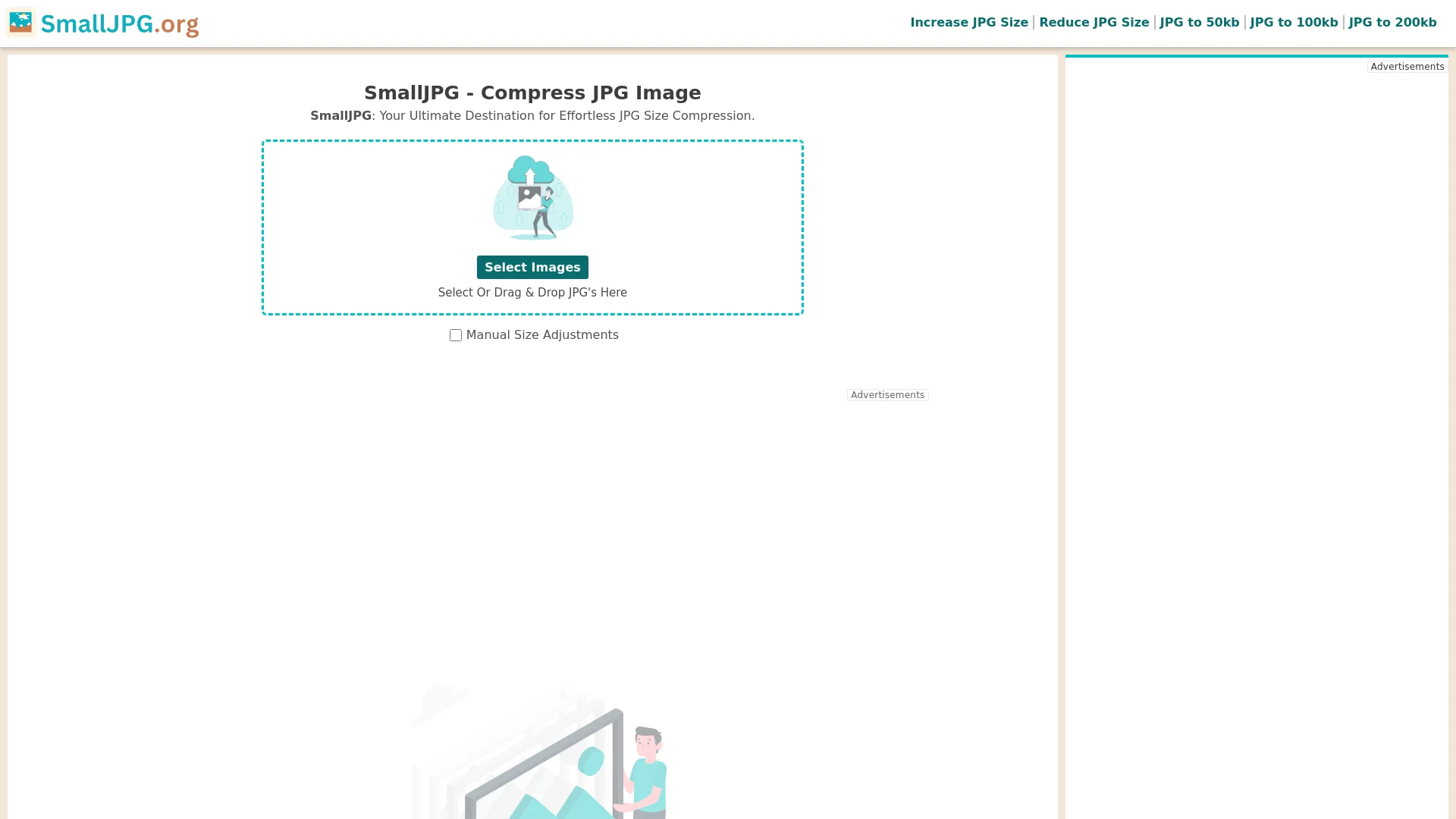
 SmallJPG
Free online image compression tool
Last week, I helped my cousin from my hometown with his teacher recruitment application. He uploaded his ID photo, and the system popped up a red box: each image must not exceed 50KB. I was stuck looking at the original photo he sent; it was taken very clearly, and even the folds on the collar were visible when zoomed in. If I carelessly cut off details, the photo submitted for review would definitely not pass.
At that moment, I remembered a tool I had saved before, specifically for handling this kind of image compression need that requires both small size and good clarity — SmallJPG. It is designed exactly for scenarios where you need to submit an image but are limited by file size. You don’t need to install any software; you can use it directly by opening the webpage, no need to wait for a long installation, and no risk of messy plugins cluttering your computer.
Official website: https://smalljpg.com
When you enter the official website, the first thing you see is the button “Compress JPG to a specified size”. There are no flashy ad pop-ups or messy function entries; it sticks to its core capability. Its rules are actually very practical — unlike some compression tools, it won’t make the image blurry to an unrecognisable state after compression, nor will it secretly convert the image to another format.
I dragged my cousin’s ID photo to the upload area on the page, and the system automatically recognised it as JPG format, so I didn’t need to select the format manually. Next, I just needed to fill in the target size — I directly entered the required 50KB, no need to adjust parameters blindly or guess the compression ratio; the tool will calculate the appropriate compression level by itself.
After uploading the image, a small progress bar will pop up on the page, along with a current compression progress prompt — you don’t need to stare at the page waiting. I sent my cousin a message saying “Just wait”, and received the compressed file in less than two minutes. The whole process took less than 10 seconds, much faster than other tools I’ve used before.
If you have something to do midway, like a reminder popping up on your computer or a call on your phone, it’s okay to close the webpage. Next time you open the official website, the uploaded image will be saved in temporary records, so you don’t need to re-upload it. This is quite thoughtful and won’t make you wait in vain.
The compressed image will automatically jump to the preview page. At this point, you need to check two details: one is whether the file size meets the required limit, and the other is whether the image clarity is sufficient. After compressing my cousin’s photo, the size was exactly 49.8KB, just a little under 50KB, which fully meets the requirement. When zoomed in, the facial details and collar lines are still there — it didn’t become a “pixelated photo” where the face is unrecognisable.
I also tried another feature at that time: if you think the clarity after compression is not enough, you can fine-tune the compression level without re-uploading the image — just adjust it directly on the preview page. For example, if you think the previous compression was too harsh, you can increase the target size by 1KB and compress it again; the clarity will improve slightly, which is suitable for scenarios that require high image details.
In fact, it’s not just for teacher recruitment applications — it can be used in many daily scenarios. For example, when uploading kindergarten application photos for your child, the teacher requires each photo to be no more than 60KB; using this tool to compress means you don’t have to ask the child to retake the photo. Also, when you run your own self-media account and upload cover images, some platforms limit the image size; using this tool to compress a cover of several hundred KB to the right size means you don’t need to change the image dimensions or reduce the quality.
I also tried compressing travel photos for my elders. Before, when posting on Moments, I had to upload them one by one, worrying about taking up memory. Using SmallJPG to compress each photo to the right size means no long waiting when posting, and elders can still see the scenery in the photos clearly. In short, it simplifies the task of “making images small while keeping them clear” — you don’t need to understand complex image parameters; just fill in the target size, and the tool will handle the rest.