Screenshots

Last week I helped a colleague on our team who works on AI implementation set up his environment, and installing the dependencies alone took three days — first the CUDA versions didn’t match, then the model weight files were missing. When the sample code finally ran, it produced nothing but garbled text on the company’s business dataset, and in the end he could only fumble through scattered tutorials online. He’s not alone — many people working on AI implementation get stuck on these small issues, holding open-source code in their hands yet unable to get a usable result running.
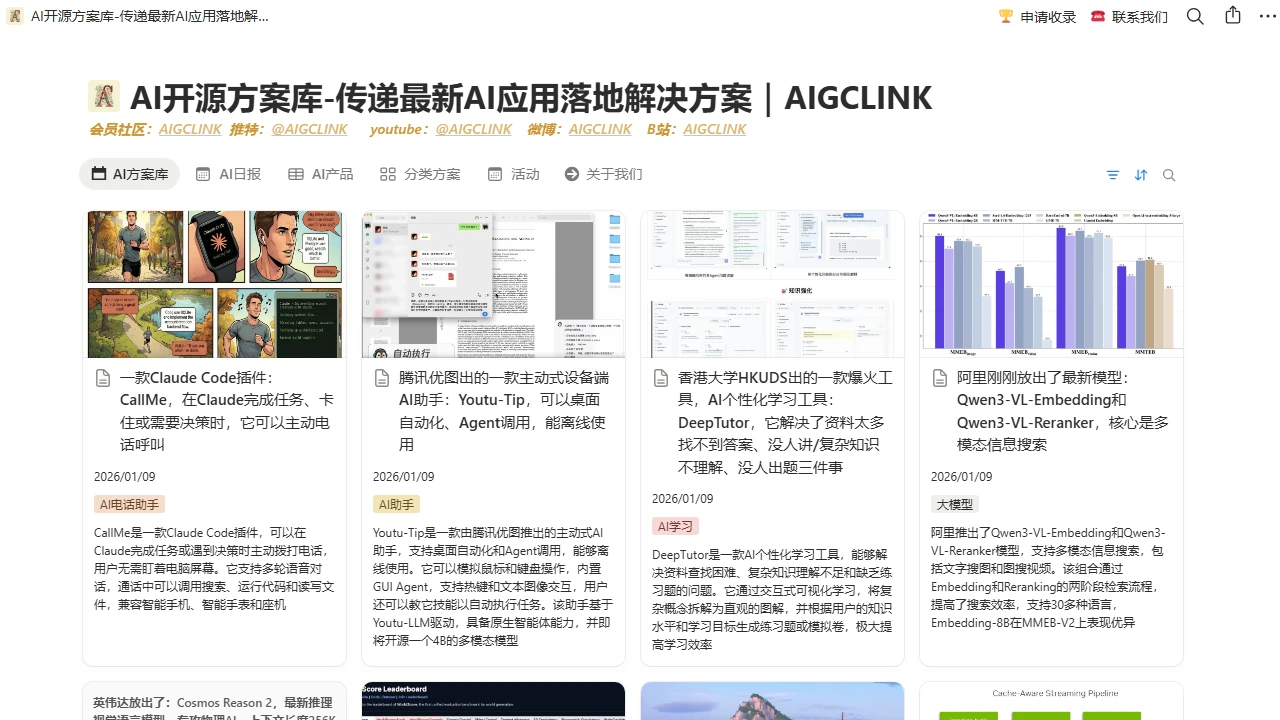
When it comes to solving these pain points in one go, AI Open-Source Solution Library is a practical choice. The platform doesn’t play with flashy concepts; it simply gathers proven AI technology resources from across the industry in one place, covering the whole chain from algorithm models to real-world implementation, so you no longer have to rely on luck to find something usable.
Filling the Implementation Pitfalls in Advance
Official website: https://d.aigclink.ai/
Many people starting AI projects focus first on picking an algorithm model, only to discover afterwards that the code was written six months ago, the environment configuration documentation is long outdated, and there isn’t even any adjustment advice for adapting it to their company’s business. The plan was to get results quickly when the project kicked off, but getting bogged down in these trivial issues drags the schedule out by more than double.
AI Open-Source Solution Library doesn’t scatter resources the old way; instead, it polishes complete solutions around the entire implementation process. Every solution comes with verified implementation cases, ready-to-use open-source code, a step-by-step deployment guide, and optimisation advice compiled from pitfalls others have hit — effectively showing you the pitfalls others have already filled in, so you don’t have to fall into them and try again yourself.
The industrial quality inspection solution I found for my colleague ran straight away after changing just two lines of dataset paths — saving him nearly a week compared with assembling the code himself.
The Library Is Packed with Ready-to-Use Resources
Open the platform’s resources page and you won’t find vague content that covers nothing but theory — every item maps directly to a specific stage of implementation.
Get Clear on Your Needs First
The resources here are organised by real-world usage logic, not piled up as a random heap of documents. Say you want to build an AI application for smart offices — instead of blindly searching the ocean of large models, just click the smart office category under vertical scenario solutions and you’ll see the corresponding real cases.
No More Assembling Scattered Supporting Materials
Beyond scenario solutions, the platform has also gathered all the supporting resources needed for implementation. You no longer have to hunt separately for code repositories, technical documentation and environment setup tutorials — every solution comes with ready-made links, clearly marked hardware requirements and rough cost budgets, so you don’t have to guess whether something is beyond your capabilities when choosing.
Deep Support Is There When You Need It
If you run into a problem that generic solutions can’t solve, the library also integrates quality AI open-source communities and technical teams from home and abroad, plus supply chain resources. When you’re really stuck, you can connect directly with experts who have hands-on implementation experience, instead of posting on forums and waiting for replies that never come.
Truly Hassle-Free Once You Start Using It
My colleague told me later that in the past, working on AI projects meant that just organising environment configuration notes could fill half a book. Now, with the solutions in this library, he simply follows the steps — even the multi-hardware compatibility issues that used to be his biggest headache need no self-debugging.
Of course, it doesn’t claim to solve all your problems — it simply marks out the pitfalls everyone has stumbled into that can be anticipated in advance. You no longer need to burn time on repeated trial and error, and can focus your energy on adjustments that genuinely fit your business.
After all, what matters in AI implementation is a usable result, not how many algorithm models you have piled up.