Baidu Image Search
An image search website under Baidu, helping users search via image recognition technology
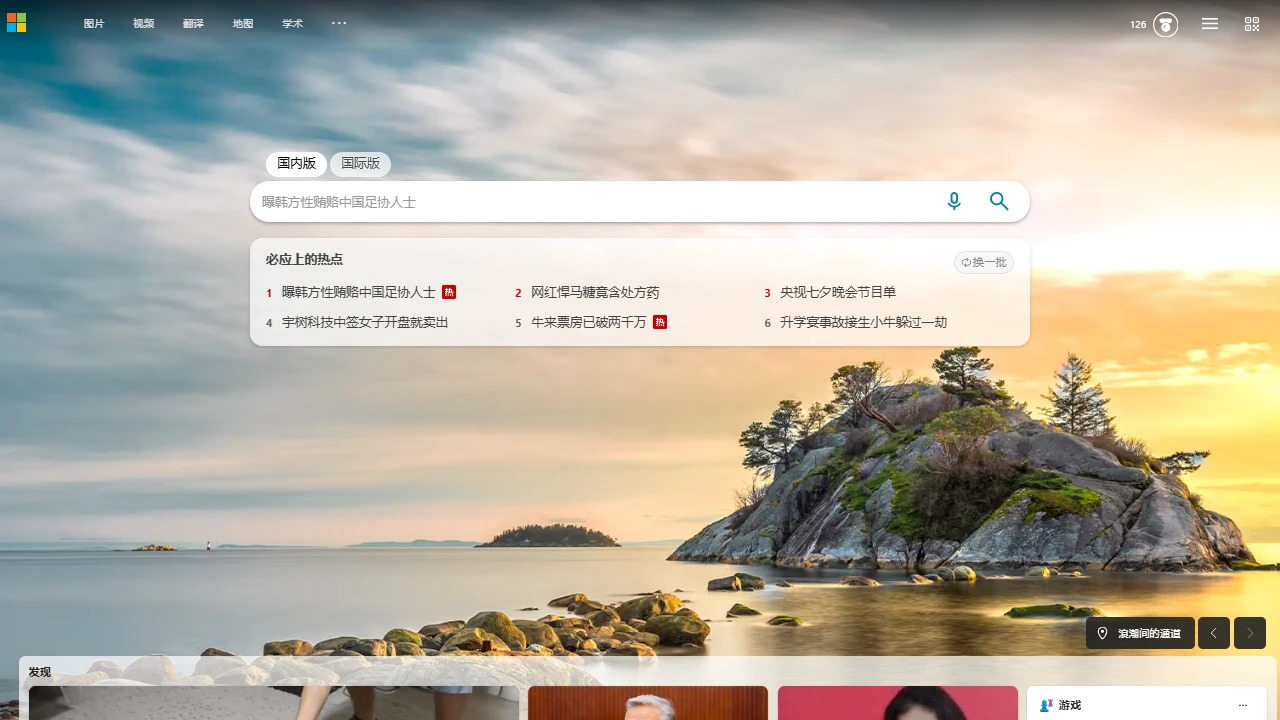
 Bing
Microsoft-owned search engine
For webmasters engaged in cross-border business or looking to cover North American traffic, Bing is an unavoidable search engine. Many people fall into traps when they first start using it—either they don’t grasp its ranking logic, or they waste its built-in traffic entry. This content will help you avoid detours and put Bing’s advantages to practical use.
Official Website: https://cn.bing.com/
I have been doing SEO for North American sites for five years. For the first three years, I only focused on Google, and later found that Bing’s traffic conversion rate is not low. It is a product of Microsoft, and is indeed the second-largest search engine in North America, holding a lot of traffic from the Microsoft ecosystem, such as the Edge browser and the search entry of the Office suite.
Its core advantages are not that mysterious—they are all practical hard strengths. For example, accuracy: it integrates users’ search history and even current search context into its algorithm, unlike some platforms that push exactly the same content to everyone. Also, its technology is not perfunctory; it uses the SPTAG distributed search library, which can produce results in milliseconds, and even uses vector search, not the old-fashioned algorithm that only piles up keywords.
Many webmasters worry that search engines are biased, but in fact, Bing is friendly to websites with compliant optimisation. In its ranking logic, content quality and originality account for a significant weight, and keyword density and placement also matter. It will not simply sentence new sites to death.
I previously helped a small outdoor gear site with optimisation, without using any black hat tactics. I just clearly wrote the real usage scenarios of the products and embedded keywords in natural context. In less than three months, Bing’s organic traffic increased by 30%. This is not a coincidence; Bing is indeed willing to give opportunities to websites that focus on creating quality content.
In addition, details of user experience are also worth attention. If the page loads slowly, its bounce rate will be higher than other platforms, because its algorithm also takes page smoothness into account. Also, its multi-format search supports images and videos. If your website has real product photos, remember to fill in the Alt tags, and you may get traffic from image search.
In addition to basic search, Bing has many directly usable features, so you don’t need to find extra tools. For example, personalised recommendations: it will give suggestions based on your search habits. Webmasters can also use this logic to link relevant content on their websites—for example, recommending matching sleeping bags to users who bought tents, which can improve user engagement.
Its multi-format search feature is particularly friendly to content websites. For example, for a travel guide site, if you organise real videos and high-definition images of attractions, when users search for “[Attraction Name] travel guide”, your content will appear in the image or video section, and the exposure will be much higher than pure text.
When I first started Bing optimisation, I made a mistake: I directly applied Google’s keyword density rules, resulting in stilted content, short user dwell time, and the ranking did not improve. Later I realised that Bing values the naturalness of content more; keywords should be embedded in sentences like a conversation, not forced.
Also, don’t ignore its mobile adaptation. Nowadays, the proportion of North American users searching on mobile phones is increasing. If your website loads slowly on mobile, even great content will be useless. After I compressed the mobile images of my small site, Bing’s mobile ranking directly rose by two places.