360良医
A safe, clean and professional medical & health search engine
 TCM Heritage
Records of TCM Heritage (Wang family); a collection of information on TCM-related theories, formulas, herbs, medical cases and more.
Many people hit the same pitfall when first getting into Traditional Chinese Medicine: either they struggle through ancient texts in a fog, or they come across piecemeal health tips that never add up to a complete learning path — and finding a reliable practical reference is even harder. To avoid these pitfalls, you don’t have to grope around on your own; there is a platform dedicated to TCM heritage that can help — TCM Heritage.
Official website: https://www.zysj.com.cn/
Most TCM content online today is scattered popular science — acupoints today, folk remedies tomorrow — and never forms a systematic learning path. TCM Heritage is different: its content is organised along the logic of “from beginner to usable”, so whether you are a newcomer just getting interested in TCM or a doctor already seasoned in clinical practice, you can find something that suits you.
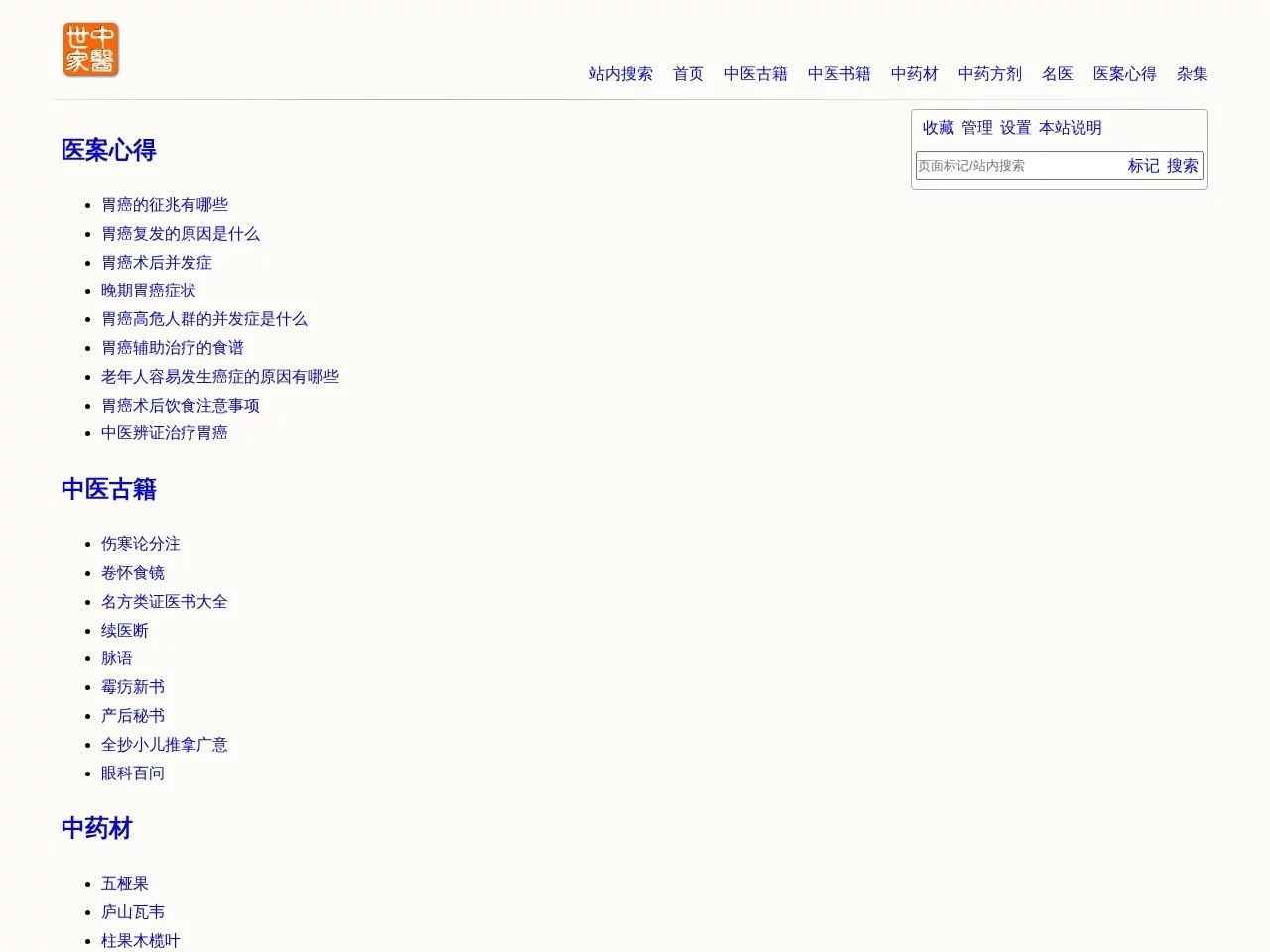
Its content is not piled up at random; it follows the thread of “reading the classics, learning modern application, knowing the materia medica, and studying medical cases”, with each step matching a real need, so you won’t spend ages studying something you can never use.
These four sections correspond exactly to the different stages of learning TCM; different users can pick according to their own needs instead of ploughing through everything from start to finish.
Many people get a headache opening the Treatise on Cold Damage (Shanghan Lun) — page after page of clauses they can’t understand, with no idea where to start. The Classic Texts Library of TCM Heritage collects practical annotated editions such as the Annotated Treatise on Cold Damage, Pulse Discourse, Postpartum Secrets and Hundred Questions on Ophthalmology. It doesn’t just present the original text; there are also interpretations for different directions — for example, the Annotated Treatise on Cold Damage covers cold damage pattern differentiation, Pulse Discourse explains pulse diagnosis, Postpartum Secrets deals with postpartum care, and Hundred Questions on Ophthalmology addresses eye problems — covering exactly the core foundational directions of TCM.
Instead of grinding away at obscure original texts, starting from these annotated editions lets you gradually grasp the underlying logic of TCM’s “principles, methods, formulas and herbs” — saving you a lot of time compared with puzzling it out on your own.
Ancient texts answer “where TCM comes from”, while the modern works section answers “how to apply old methods today”. It collects books such as Zou Mengcheng’s Thirty Years of Clinical Experience and the Guidelines for Paediatric Diagnosis and Treatment. They don’t simply copy old theories but combine them with today’s actual conditions. Whether you want to apply ancient methods to daily care or do academic research, you can find reliable references here.
For example, some old formulas may need adjusting for people today, and these books offer ready-made approaches, so you don’t have to go through repeated trial and error yourself.
Learning TCM ultimately comes down to using herbs, yet many people know the names of medicinal materials without knowing exactly how to use them. The Herbs & Formula Guide of TCM Heritage describes the properties and effects of herbs such as Dillenia and white clover in great detail, and gives clear usage instructions for formulas such as Wuji Jian Yuan pills and Modified Tianma Decoction. Whether you are prescribing in clinical practice or doing academic research, you can find reliable grounds here.
No more hunting around for scattered materials — everything here is already organised, so you don’t have to piece information together yourself.
Theory and herb knowledge alone are not enough; the pitfalls of clinical practice can only be avoided through the experience of others who have trodden them. The Medical Case Insights section is full of real-world records from TCM experts — not vague theories, but formulas and thinking that have been put to real use, helping you avoid many detours.
For example, when you encounter a similar condition, you can see how experts adjust herb dosages and modify formulas according to the patient’s situation — practical experience that books simply cannot teach.