TMTPost
A media platform integrating information exchange and convergence, IT technology information, and new media
 Wall Street CN
China's leading provider of business and financial information, offering users services including news, data, market quotes, research, and community.
When tracking pre-market movements of US stocks, do you always struggle to keep up with key information? Either you miss the first wave of market changes, or the content you scroll through is messy like a tangled ball of yarn, taking you ages to find something useful — this is a pitfall most people have encountered when using financial information platforms.
Official website: https://wallstreetcn.com/
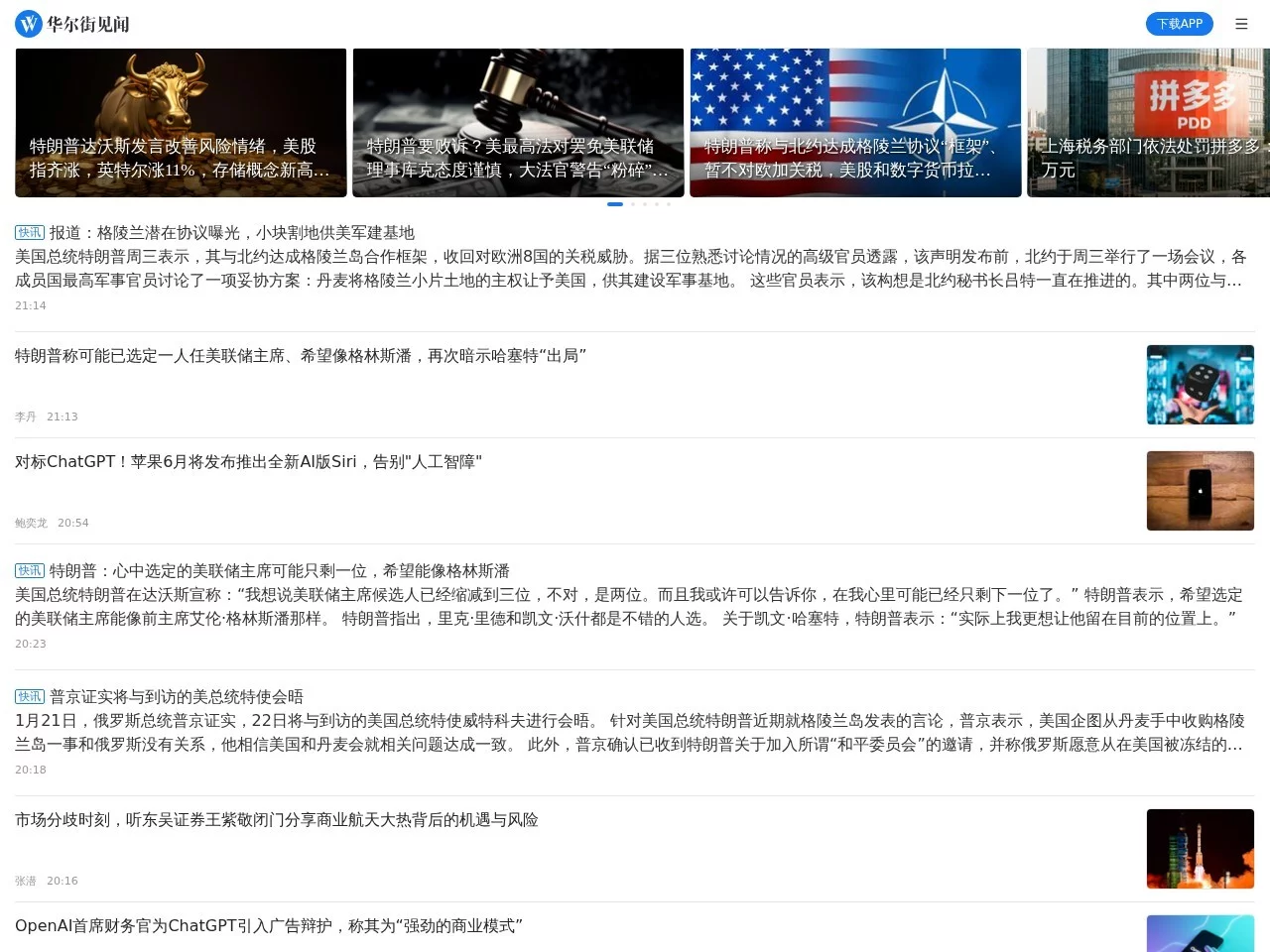
Many people using financial platforms are most frustrated by the half-beat delay in information — by the time you see an industry news item, the stock price has already moved several times. Wall Street CN is the first platform in China to adopt a “real-time” model for business and financial information, with important information pushed at the second level. This is not an empty concept; it truly minimises the time gap of market dynamics. It also maintains 7*24-hour uninterrupted service all year round, so even overseas market movements in the early morning won’t make you wait until the next workday to see them.
Compared with general information platforms, its information coverage is less scattered and messy, all being solid content related to finance and business. It is specifically divided into three categories: one is real-time news and in-depth analysis of the global economy, markets, industries and enterprises, such as instant interpretations of Federal Reserve interest rate decisions and details of a tech giant’s financial reports; another is professional content such as stock market dynamics and macroeconomics, which helps you understand the direction of the overall environment; the third is the latest information in segmented fields, covering specific tracks such as the stock market, currency, funds, banking, insurance, technology, and medicine, so you won’t waste time on irrelevant content.
If you want to scroll through information on the go, just open the iOS or Android version of the app. The interface doesn’t have too much useless stuff, making it quick to find market quotes and read news.
If you are already used to social media platforms like NetEase News, you can also find its official account there. The content posted synchronously is consistent with the main platform, so you don’t need to install an extra app.
When driving or doing housework and don’t want to stare at the screen, you can also listen to its FM-Radio audio programs, which are all quick summaries of market overviews and core news, adapting to different receiving habits.
Compared with financial accounts that only offer text and images, its multi-channel coverage is more flexible — text and images are suitable for stopping to read analyses carefully, the app is suitable for checking movements at any time, and audio is suitable for “hands-free” scenarios, so you won’t be tied to the screen. For example, during the morning rush hour, listening to 10 minutes of audio lets you know the key changes in US stocks last night, saving time compared to scrolling through a bunch of scattered messages yourself.
Many people worry that financial platforms are low-quality, either reposting old news or unsubstantiated opinions. Wall Street CN’s feature is its professional content ecosystem: all authors on the platform are certified, and there are many high-quality content creators. The content they produce includes articles and videos, all being genuine in-depth insights.
Compared with the “general content” of ordinary platforms, its author circle is more vertical. For example, there are analysts who specialise in the pharmaceutical industry, and macro experts who track the Federal Reserve. They won’t casually post unverified news. It has always said that it provides accurate, timely, and professional financial information, which is not a slogan but implemented by screening content and certifying authors — every core information you see has corresponding professional support behind it, so you won’t make investment judgments based on vague information.
Ordinary investors who want to know why a certain stock has risen suddenly don’t need to go through dozens of announcements themselves; they just need to check its real-time push and interpretations.
Industry practitioners who want to track the latest trends in their segments can save time on finding information through the segmented information sections.
If you just occasionally want to learn about macroeconomics, the 7*24-hour service allows you to find content when you need it, without waiting for workdays to view it.
Compared with trading software that only provides market quotes, it adds news and analysis, not just giving you a number but also telling you the logic behind it. Compared with research institutions that only offer in-depth content, its information is updated in real time, not waiting for reports to be released before providing it. It balances depth and timeliness, which is what makes it different from other platforms.
Most people struggle with two points: either they want fast information to get movements ahead of others, or they want professional content to help them understand the logic behind it.
Wall Street CN has achieved both of these points. Its second-level push does not sacrifice accuracy, and professional content does not slow down the speed of information. This is also the reason why it has become a leading business and financial information service platform in China.
You don’t have to choose between “speed” and “accuracy”, nor compromise between “comprehensiveness” and “precision” — its section coverage can meet all-round financial information needs, from daily stock market quotes to in-depth industry analysis, from real-time news to quick audio summaries, all corresponding to different usage scenarios. In short, it saves users the time of finding and screening information, allowing them to focus on truly important judgments.