PurePNG
A free online PNG image asset library
 nonscandinavia
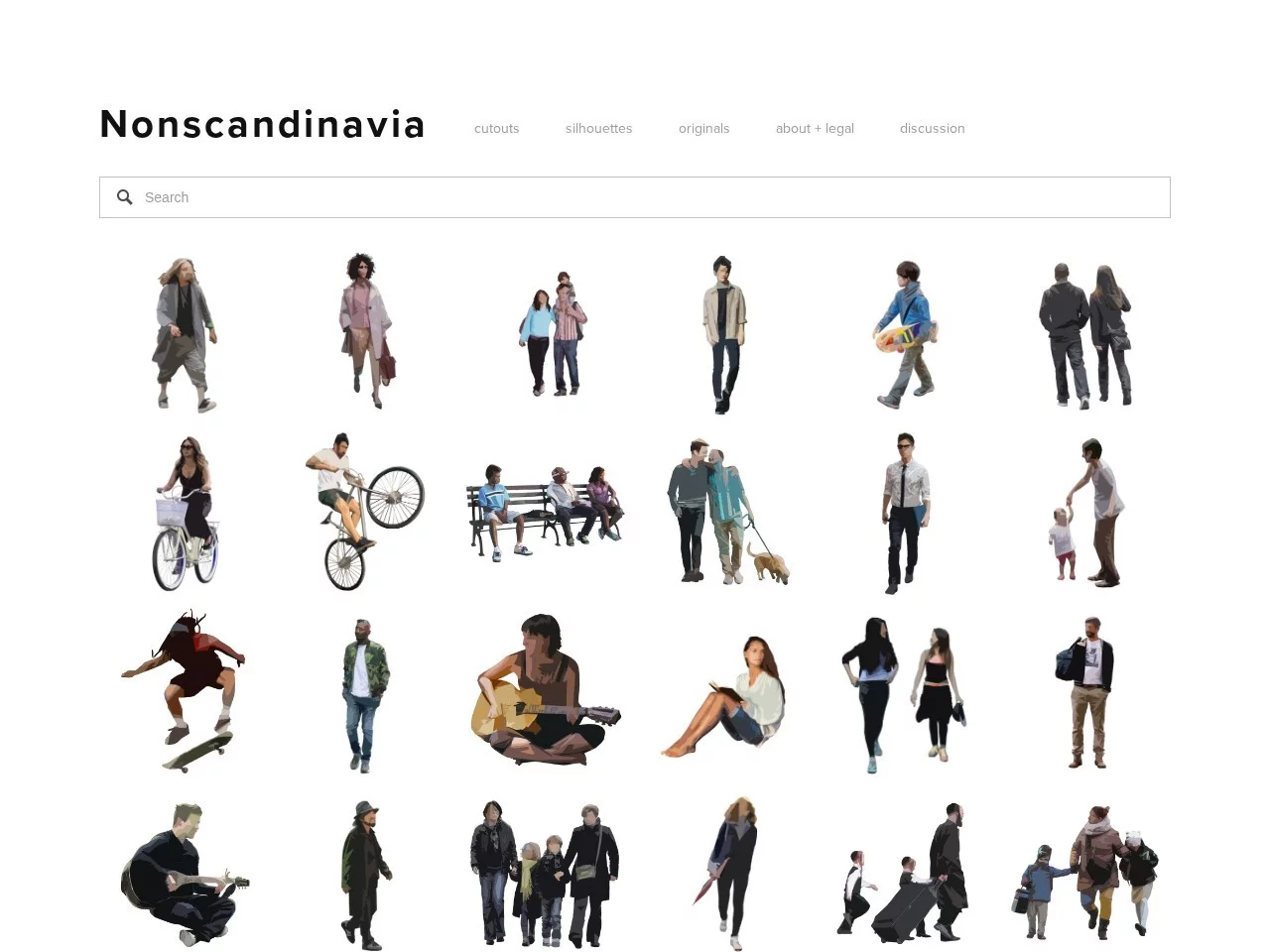
A variety of cutout human figure materials
In architectural design renderings, course assignments, or professional portfolios, human figure materials are one of the core elements conveying spatial atmosphere and humanistic texture. However, for a long time, most material platforms have had a serious homogenization problem in presenting human figures—mostly leaning towards a single Western young demographic, lacking coverage of diverse identities such as different races, ages, sexual orientations, making it difficult to reflect the inclusivity and social responsibility of architectural design. As a free and open-source material platform built exclusively for the architecture field, nonscandinavia fills this gap perfectly, providing more diverse visual expression tools for architectural professionals, students, and educators.
Official Website: http://www.nonscandinavia.com/
nonscandinavia is a free and open-source project created by the A-Frame student team from Columbia University’s Graduate School of Architecture, Planning and Preservation (GSAPP). Its core goal is to promote dialogue on inclusivity and diversity in the architectural representation field by providing diverse human figure materials, allowing more diverse group images to appear in architectural design works.
In addition to basic human figure materials, nonscandinavia also has an additional creative content section, including chapters sharing unique graphic methods, and a newly added “originals” original material area, providing users with more creative reference directions, expanding the visual boundaries of architectural representation, and avoiding the homogenization problem of material use.
For first-time users of nonscandinavia, the first thing to note is the platform’s access permissions: due to regional network restrictions, if you cannot open the website directly, you may need to use VPN tools to access the material resources normally.
When downloading materials, it is recommended to prioritize high-definition large image versions, especially for portfolio display or printing scenarios, which can achieve clearer visual effects; if used for course assignments, medium-resolution materials are sufficient, and the loading speed is also faster.
In addition, due to the platform’s educational non-commercial positioning, users must comply with the platform’s usage rules when using materials, and must not use them for commercial projects, profit-making products, or advertising purposes, to avoid copyright disputes.
For architecture students, using materials from nonscandinavia can show a richer humanistic perspective in course assignments. For example, when designing community housing, matching human figures of different ages and races can make the work closer to real life scenarios, enhancing the depth and inclusivity of the design.
For architectural educators, these materials can be used as teaching cases to guide students to pay attention to diversity issues in architectural design. For example, when explaining public space design, through human figures of different groups, students can understand how spaces adapt to the needs of diverse users, and cultivate design thinking with social responsibility.
As an open-source platform focused on diversity in architectural representation, nonscandinavia does not pursue commercial benefits, but supports education and academic research through free materials, helping the architecture field achieve more inclusive visual expression, and bringing new creative possibilities to the industry.