
5000言
5000yan brings together well-known classic Guoxue works, providing translations and interpretations. The platform aims to spread Guoxue knowledge and national culture, so that everyone can fall in love with the splendid Chinese civilization.
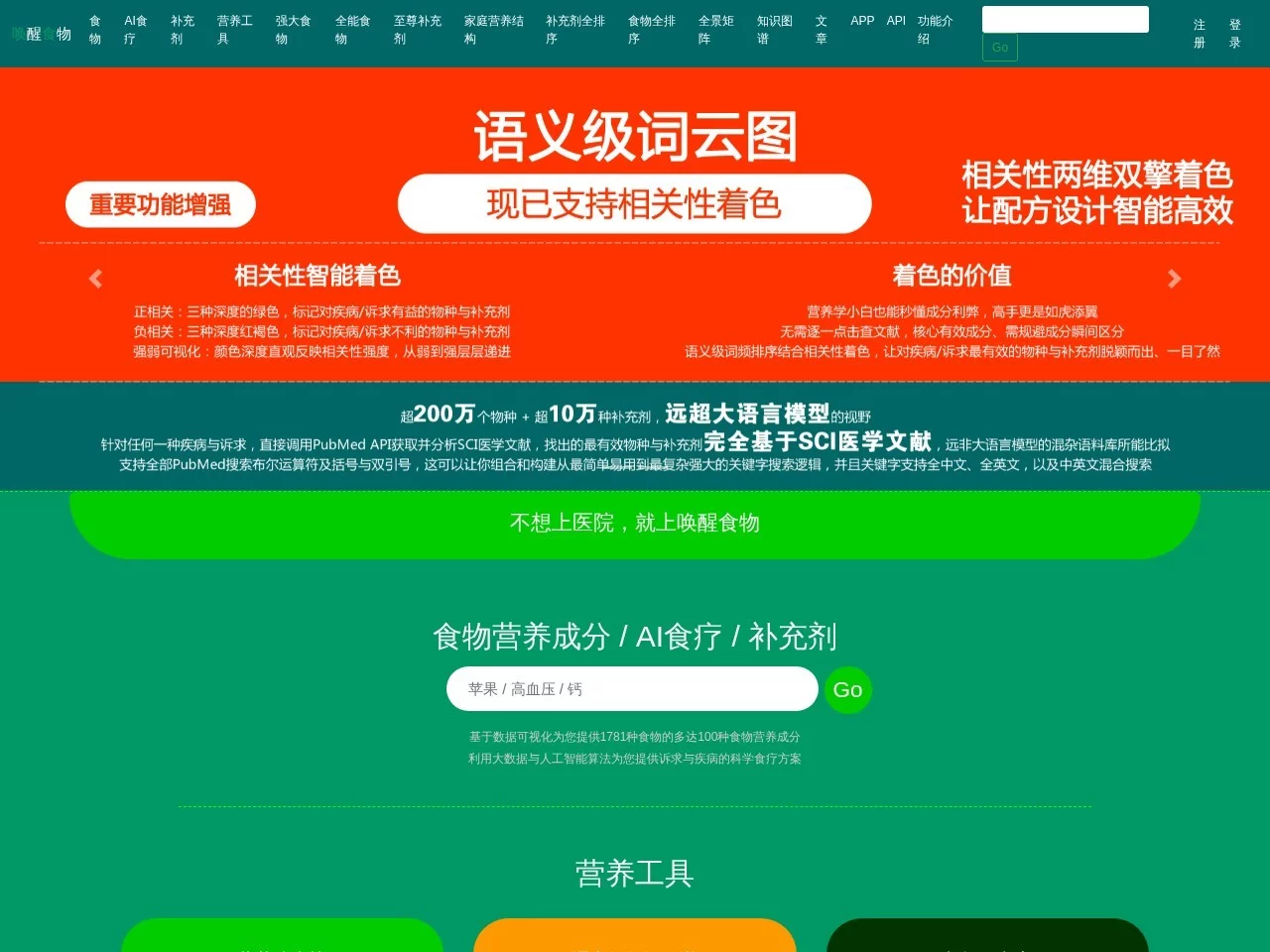
 Foodwake
Using artificial intelligence and data visualization technology to provide you with comprehensive and intuitive food nutrition information and scientific dietary therapy ...
Many people visit health platforms with specific questions: what should they eat to improve sleep? Will supplements be a waste of money? When looking up nutrition, some just want to quickly find high-calcium ingredients, while others want to compare the differences between two vegetables.
Many people think of dietary supplements as “a scam that exploits people’s ignorance”, but this is a misunderstanding: supplements promoted through false marketing and hype are one thing, while nutrients, natural extracts, and herbs validated by double-blind controlled trials conducted by global research institutions are another.
Official website: https://www.foodwake.com/
Most food nutrition data on regular platforms are outdated values from years ago, either incomplete or inaccurate. If you want to check the folic acid content of a certain green leafy vegetable, you might spend ages searching for an accurate figure. The food nutrition database of Foodwake can directly display the content of various nutrients in a single food, with even specific values of trace elements clearly marked.
If you’re in a hurry and don’t want to search through data one by one, you can use the Quick Nutrition Check List and Nutrition Combination List — the Quick List directly sorts high-value nutritious foods, while the Combination List helps you pair nutrients from different ingredients, creating a complementary effect where one meal is equivalent to two, so you don’t have to guess and match on your own.
There are two other practical features rarely found on other platforms: food pH balance lookup and food comparison. If you want to adjust your diet, you don’t need to remember complex pH theories — just check to know which ingredients you should eat more of. If you’re struggling to choose between broccoli and cauliflower for dinner, click to compare and see the differences in protein and vitamin content at a glance.
Many health platforms nowadays are either advertising spaces for businesses or general science popularization content that can’t specify exact serving sizes or applicable groups. All content on Foodwake is based on nearly 1.2 million publicly available supplement experiment reports, authoritative science popularization resources like Wikipedia, content from classic Chinese medicine works, plus AI algorithms and original pattern recognition technology.
The core of this system is to help you avoid “pseudoscience” and “useless products”. For example, if you want to know the actual efficacy of a certain plant extract, it won’t say it “cures all diseases” — it will only tell you which experiments have verified it can improve specific conditions, and which groups are unsuitable for taking it, completely presenting facts.
I tried using it to look up a common herbal supplement, and I could directly see the corresponding experiment year, sample size, and which authoritative institutions conducted the tests, without having to search through thick papers myself.
For ordinary users, its value is not just about looking up data, but also helping you build a clear understanding. For example, if you want to adjust the diet of elderly family members, you can find dietary therapy plans for their specific conditions; if you want to try supplements, you can first understand their real effects, instead of buying randomly.
Every data update is another step in this direction. It doesn’t do flashy gimmicks — it just wants the nutrition information you get to be directly applied to daily diet and health management.