
Shetu
Design image material website, original material sharing platform
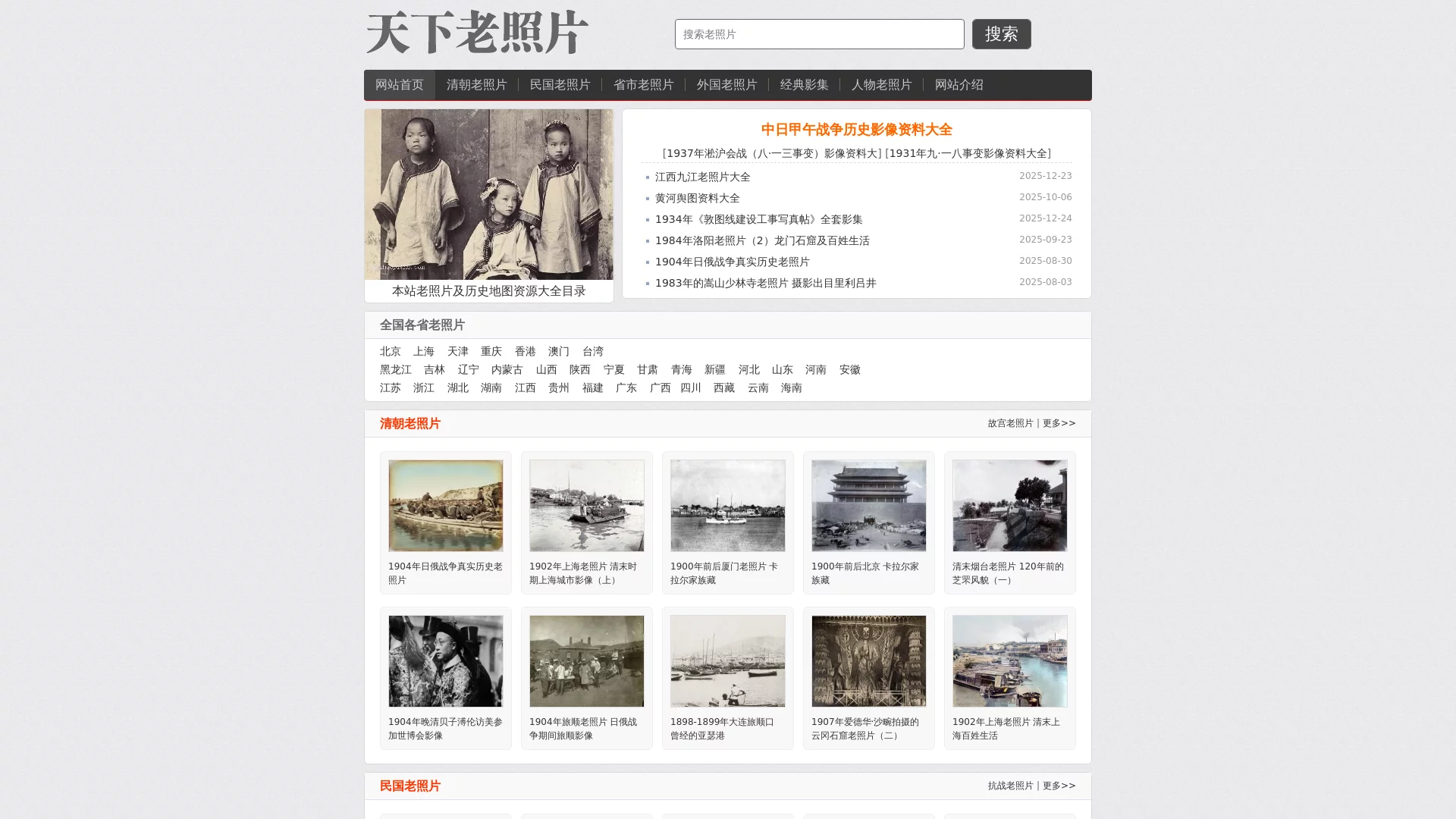
 World Old Photos
An open, professional gallery of historical old photos
In the digital age, old photos are no longer nostalgic keepsakes buried at the bottom of a chest, but vivid carriers of memory that link together a century of history. As China’s professional platform for sharing historical imagery, World Old Photos, with its massive collection of historical photographs, has become an important gateway for history enthusiasts, image researchers and ordinary users alike to explore the past. Unlike ordinary photo-sharing websites, it focuses on precious historical images from China and abroad, opening a window for users to directly perceive the transformation of modern China and the features of world history.
The core strength of World Old Photos lies in its systematically organised image resources, covering the key historical stages from the Qing dynasty to the Republic of China era and extending to the turbulent imprint of the War of Resistance period. In the Qing dynasty old photos section, users can find precious images ranging from palace scenes in the Forbidden City to everyday street life among ordinary people — most of them first-hand records of society at that time, restoring the true appearance of the late feudal dynasty. The Republic of China era photos focus on urban development and social change, with old photos of popular cities such as Chongqing and Shanghai being especially abundant: from the international architecture along the Bund to Chongqing’s dock culture, every photo tells the story of a city’s growth.
In addition to domestic image resources, World Old Photos also collects a large number of old foreign photos, allowing users to cross national borders and learn about the historical features of different countries. Meanwhile, the platform has integrated old photos of the War of Resistance and related historical footage, presenting historical moments that are hard to convey in words in a visual form, helping users understand the social background and figures of that period more intuitively. Whether you want to explore what China looked like a century ago or follow prominent figures of a specific historical period, you can find the corresponding content in the platform’s categorised resources.
Official website: http://www.laozhaopian5.com/
World Old Photos is not merely an image storage platform; it has built an open space for professional image exchange. The platform not only offers the viewing of all kinds of historical old photos, but also sets up dedicated sections such as Figures and Classic Albums, allowing users to quickly locate image content on specific themes according to their interests. For example, in the Figures section, users can find portrait photos of important people from different historical periods and, combined with relevant background material, gain an in-depth understanding of their lives and contributions; the Classic Albums section integrates photos of the same theme or the same period, forming a complete historical narrative thread that helps users organise historical context more systematically.
For users, World Old Photos is extremely easy to use: most image resources can be browsed without a complicated registration process, and images support online zooming, making it possible to clearly capture the details in old photos — such as people’s clothing or objects in a scene — which are often important evidence for historical research. In addition, the platform’s image resources have been strictly screened and categorised, avoiding the interference of disorganised content. Whether for a history enthusiast’s daily browsing or an image researcher’s material gathering, the experience is highly efficient.
To make full use of the resources of World Old Photos, mastering some browsing techniques can save a great deal of time. First, make good use of the platform’s category navigation: through clear category entries such as “Qing dynasty old photos”, “Republic of China old photos” and “War of Resistance old photos”, you can quickly locate image resources from your target period instead of searching blindly through a massive amount of content. Second, for searches on specific themes, filter with keywords — for example, searching “Republic-era Shanghai Bund” or “figures of the War of Resistance” — to precisely find the relevant photos and images.
In addition, the platform’s Classic Albums section is a quality resource that is easily overlooked. These albums are usually arranged around a particular historical event or regional theme, forming a complete chain of visual narrative — excellent learning material for users who want to understand a certain period of history systematically. Meanwhile, while browsing, users can pay attention to the notes on the background of each photo; this accompanying text helps explain the historical story behind the photos, turning simple picture viewing into a deeper historical understanding.
At a time when historical imagery is receiving increasing attention, World Old Photos fills the gap in the online sharing of professional historical image resources. It not only provides users with a free platform for viewing historical images, but also promotes the spread and inheritance of historical culture through its open, shared model. Whether ordinary users sensing the transformation of China over the past century through old photos, or researchers using the platform’s resources to carry out related studies, all can find valuable content here.
With the development of digital technology, the digitised storage and distribution of old photos has become more convenient. Through professional resource curation and an open exchange model, World Old Photos ensures that precious historical images are no longer confined to museum display cases but have entered the view of more people, becoming an important cultural bond connecting the past and the present.